
By Location
Skin Questions From Hermosa Beach Readers
The skin treatment questions Hermosa Beach readers ask most, and where sun, salt water and the drive to a clinic change the answer.

Hermosa Beach is a small beach city in the South Bay of Los Angeles County, and the questions that arrive from it have a pattern. They are the same questions asked everywhere else on this site, with one variable turned up: sun.
Salt water, sand glare, outdoor sport and a habit of living outside change the answers on pigment, on resurfacing recovery and on how long a result lasts.
This page collects the questions that South Bay readers ask most and says where the coast changes the answer.
The site is edited in Hancock Park, in central Los Angeles, and the pages it links to are written for the whole city. What follows is the coastal reading of them.
When the details conflict, start with ultraviolet exposure, because it sits underneath every question from a beach city.
Reflected light from sand and water adds to direct sun, so a face by the water takes more exposure than the same face at the same hour inland.
That raises the odds that melasma returns, that post-inflammatory pigment follows a peel or a laser, and that a resurfacing result fades faster than it would in a shaded neighborhood.
It also means the aftercare rule that says two weeks out of the sun is, for a Hermosa Beach reader, a more demanding instruction than it sounds.
The practical consequence is timing. Resurfacing, deeper peels and pigment treatments are easier to recover from in the cooler months, when the beach is quieter and an indoor fortnight costs less.
Injectables and threads carry no sun rule beyond the first day or two, so they are the treatments a coastal patient can book without watching the forecast. Water quality is a separate question, and open skin and poor water grades do not belong together.
Most clinics that offer the full range of treatments discussed on this site are in central and western Los Angeles, and a South Bay patient is choosing between a local practice and a drive. The drive matters more for some treatments than others.
Injectables and threads involve a consultation, a treatment visit and usually one review, all of which can be planned around traffic.
Resurfacing and pigment treatments involve a series of visits weeks apart and the chance of needing to be seen quickly, so distance to the treating clinician is part of the choice.
The complication question is where distance bites. A vascular occlusion after filler is managed in the first hours by the clinician who injected, so a patient should know before booking how far that clinician is and who is reachable after hours.
A filler problem is handled by the injector, and the clinic's plan for reaching them is the number that matters.
About us
About these answers
This page is written by independent editors in Hancock Park who have applied the site's reading of consent forms and clearance letters to what a coastal life does to skin.
Readers who swim after treatment are pointed to the beach grades Heal the Bay publishes for Santa Monica Bay. No one here holds a medical license or has seen the reader's face; the licensed clinician who examines a patient in person decides.
Questions Hermosa Beach readers ask

Does melasma come back after successful treatment?
On the coast, the honest answer is that maintenance is the treatment. Sunscreen and shade are the protocol and the device is the supplement.

Is hyperpigmentation permanent if untreated?
Marks that would fade inland fade more slowly under daily sun, and some darken instead.
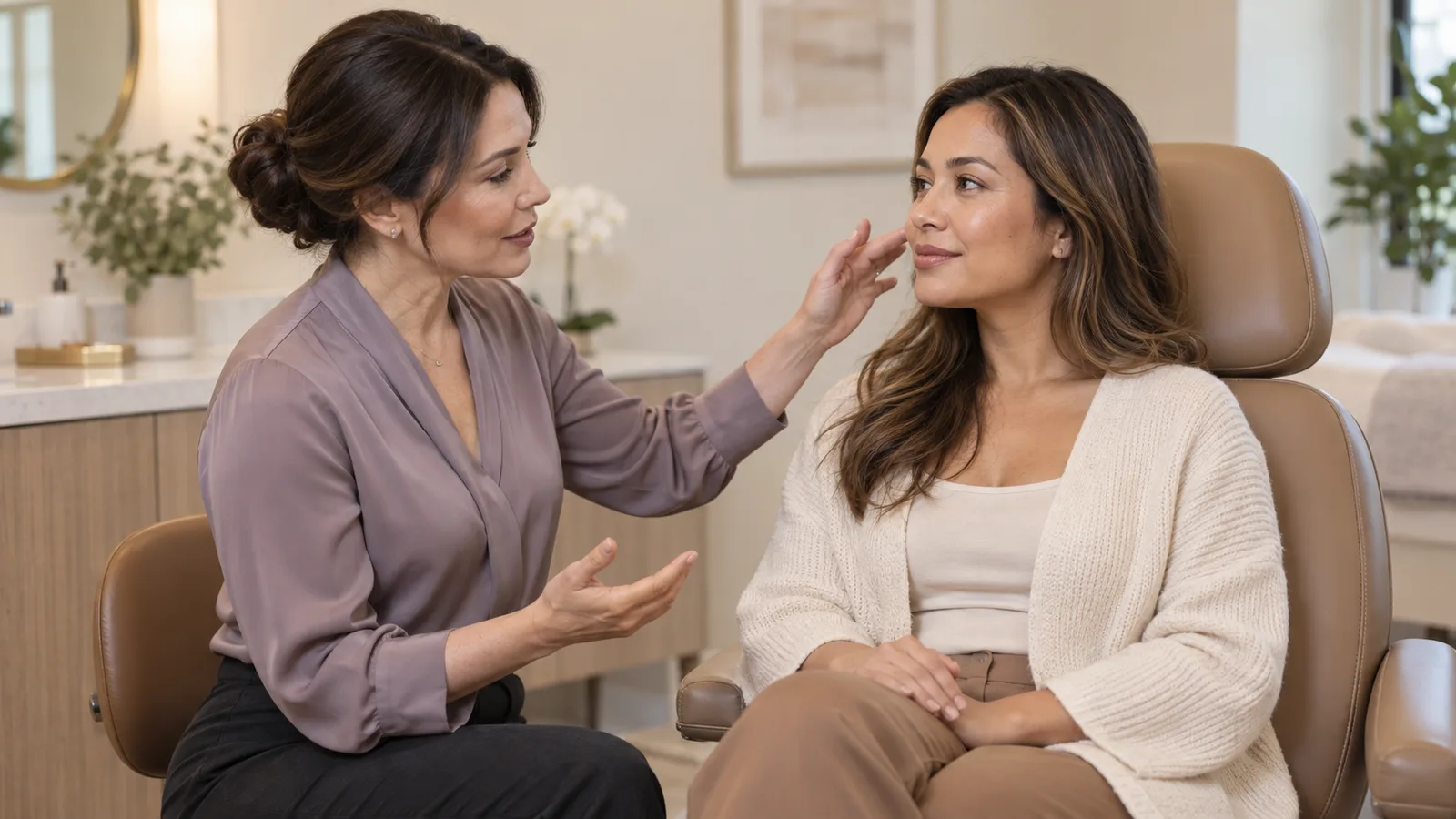
How is skin prepared in the month before a peel?
The pre-peel sun rule is stricter for a face that is outside every day, and the clinic should say so.

How long before resurfacing results are visible?
The timeline is the same; the risk of losing the result to exposure in the first months is higher.
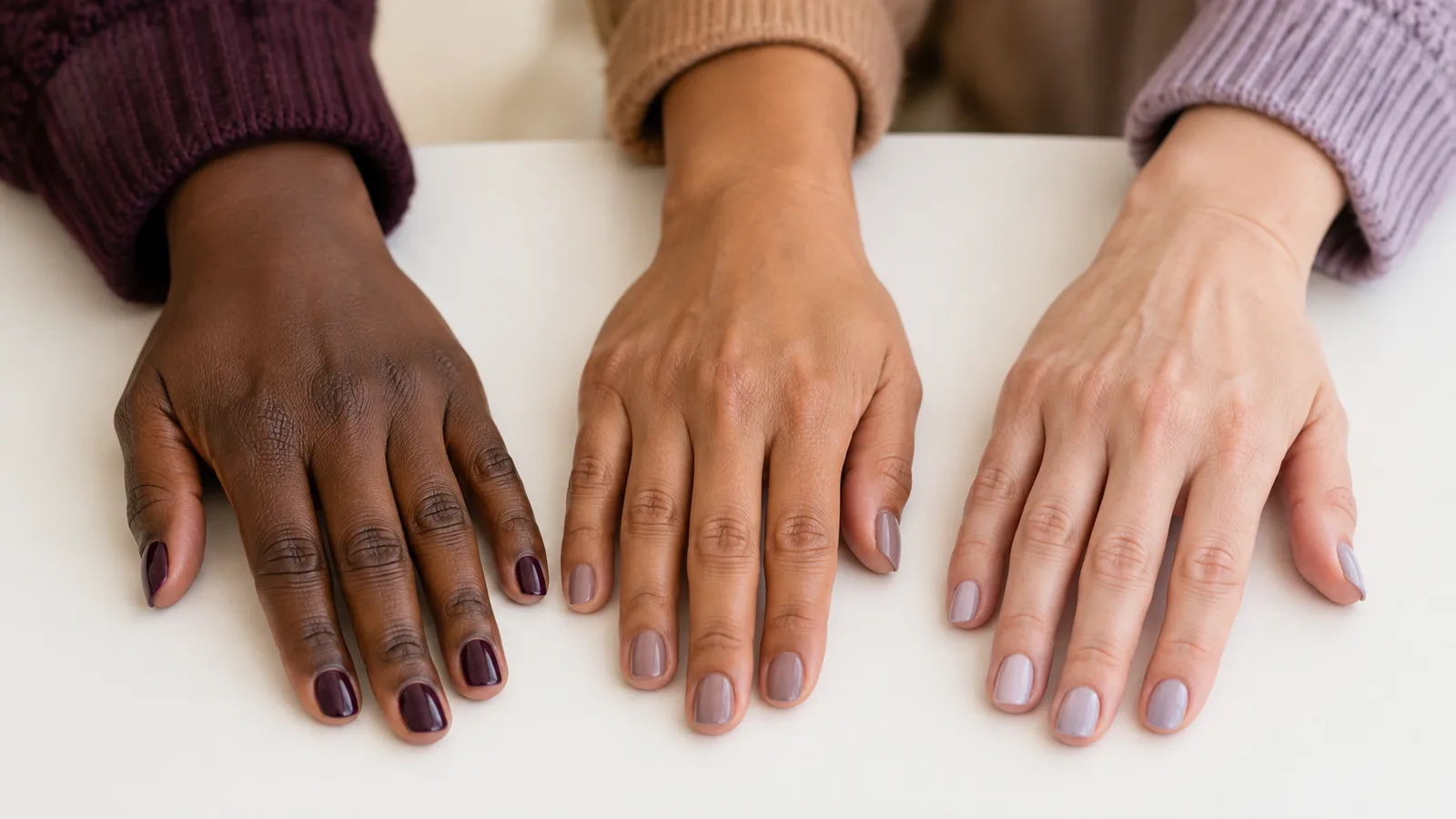
Does skin type change which laser is suitable?
A tan counts as a change in skin type for the purpose of laser settings, and a summer face may be told to wait.

What is usually avoided the week before injectables?
The one topic where the coast changes nothing.

Can lifting devices be used on the neck?
Sun-damaged neck skin is thinner and responds differently to heat, which affects device choice.

About us
How these pages are written
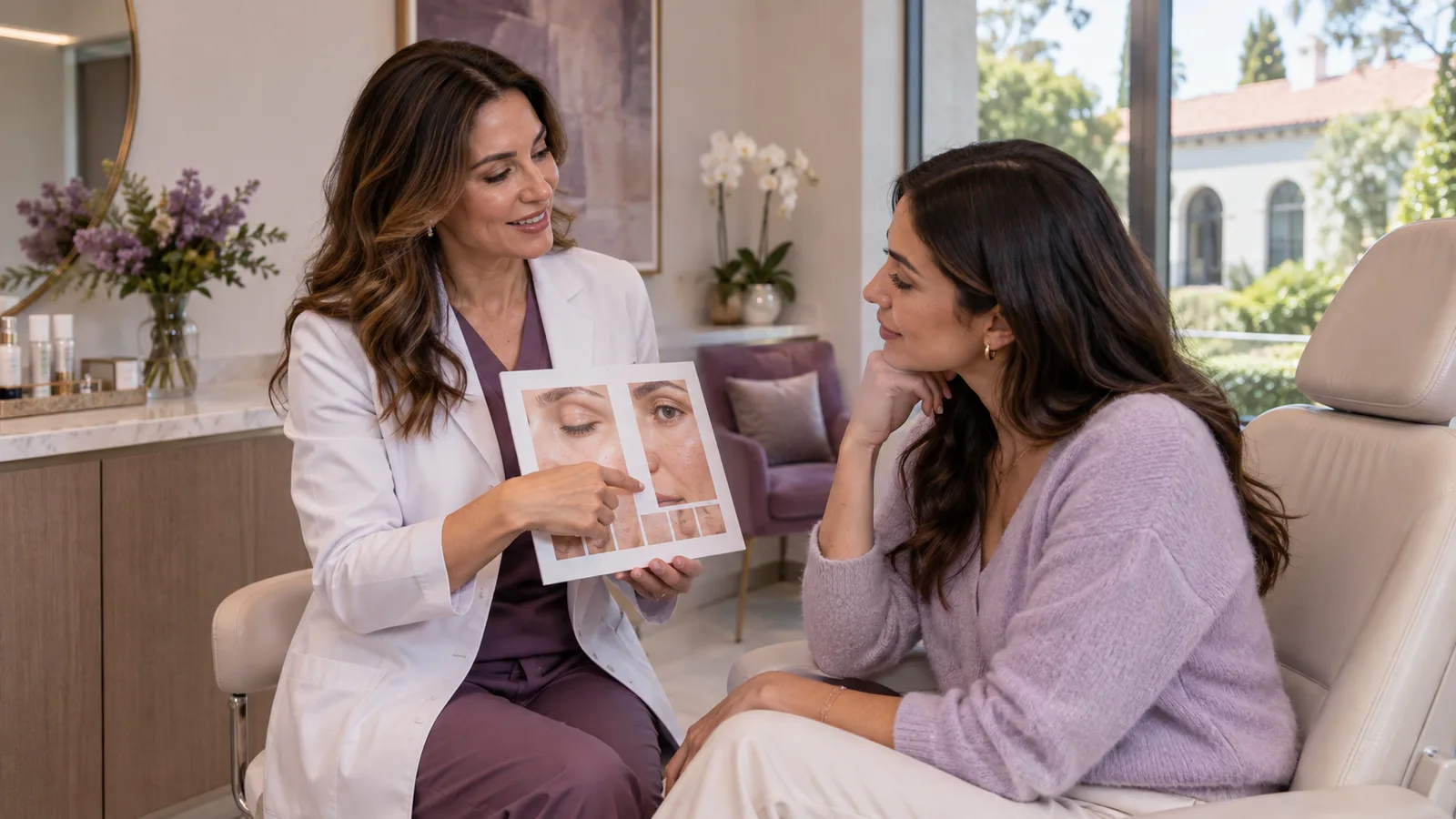
Our editors are readers, not clinicians, and none holds a medical license. For what emergency services do and do not handle, they point to the plain guidance the Los Angeles Fire Department publishes; a filler problem is handled by the injector who placed it.
Before booking from the coast, ask the licensed clinician who will treat you how they are reached after hours.
Before booking
The pigment question comes first
Sun sits underneath every question from a beach city, and the page where the coast changes the answer most is the one on whether melasma comes back after treatment.