
Question
Can Lifting Devices Be Used on the Neck?
Whether the device quoted for the lower face can be run onto the neck, whether threads work there, and why some clinics decline it.

The neck is where many people first notice age, and it is also where the brochures go quiet.
A reader who has been quoted for radiofrequency or ultrasound on the lower face wants to know whether the same device can be run down onto the neck, whether threads work there, and why some clinics decline the neck altogether.
The question is a common one in Hancock Park, where a good deal of outdoor life is lived with the face protected and the neck forgotten.
This page is part of the thread lift and lifting topic and covers the neck as a separate anatomical problem, which is how a careful clinician treats it.
The short answer
The short answer
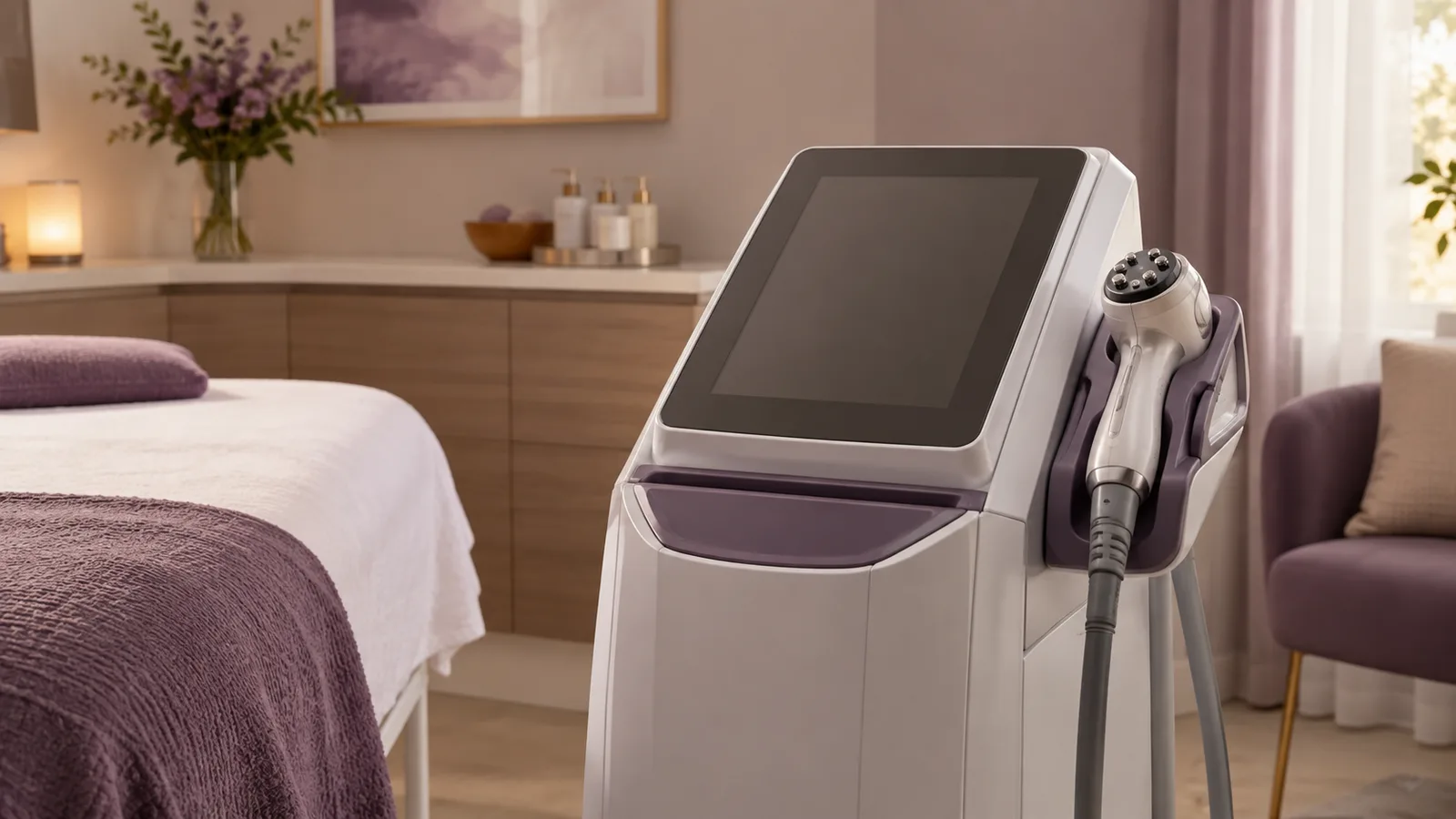
Yes, with limits. Ultrasound and radiofrequency devices are cleared for the neck and the area under the chin, and they produce a modest firming of loose neck skin, most visibly in early laxity.
They do nothing for platysmal bands, which are muscle, and little for a heavy fat pocket. Threads fail and show more often in the neck than in the face. The neck is three problems wearing one name, and a device treats one.

About us
About these answers
This answer reads the clearance letters that list the neck and submental area among device indications, alongside the consent forms for neck treatment and the published firming results, by independent editors in Hancock Park.
No one on the editorial side holds a medical license or works for a clinic. What is written here prepares a consultation; a licensed clinician who has seen the skin makes the call.
What decides the answer
The first question a clinician asks is what the reader is seeing. Loose, crepey skin with fine horizontal lines is a skin problem, and energy devices are a reasonable match for it.
Two vertical cords that stand out when the jaw is clenched are platysmal bands, and the usual treatment is a neuromodulator injected into the band or, in heavier cases, surgery.
A full pocket of fat under the chin is a third problem, and the options there are injectable fat-dissolving treatment, liposuction or a device set to target fat rather than skin.
Most necks show more than one of these at once, and the mismatch between what a patient points at and what a device can treat is the main cause of disappointment.
The second question is skin quality. Sun damage on the neck is often worse than on the face, because the face got the sunscreen.
Heavily sun-damaged skin makes less new collagen in response to heat, so the same device produces less on a weathered neck than on a protected one.
Fitzpatrick skin type also matters: darker skin carries a higher risk of pigment change after any heat-based treatment, and a clinician will usually lower the energy or choose a different device.
The third question is thread suitability. Threads can be placed in the neck, and some injectors do it, but the thin skin and constant movement make visible threads and early failure more common there than in the midface.
Many experienced injectors decline neck threads for that reason, or reserve them for a narrow group with good skin and mild laxity. Declining is not a sign of a poor clinic. It is often the opposite.
Timing plays a part as well. Neck treatments bring a few days of swelling and tenderness, and people who plan them around a quiet week tend to be happier with the process.
Volunteer commitments and family calendars are the usual constraints, and organizations such as United Way of Greater Los Angeles publish their event calendars far enough ahead to plan around.
Expert note
The neck differs from the face in three ways that matter for any lifting device. The skin is thinner, with less fat beneath it, so energy that is safe on the cheek can reach structures on the neck that were never meant to be heated.
The platysma, the broad sheet of muscle under the neck skin, produces the vertical bands that many patients call sagging, and no skin-tightening device acts on muscle. And the neck moves constantly, which is hard on any thread placed there.
Clearance letters for the main ultrasound and radiofrequency systems do list the neck and the area under the chin among their indications, so treatment there is on-label for those devices when used as described.
The professional literature reports modest firming of neck skin with both technologies, larger in early laxity and small in heavy laxity.
Consent forms for neck treatment list nerve irritation, since the marginal mandibular nerve runs close to the surface along the jaw, as well as burns and fat loss.
Next steps
After the first check, the better question is which of the three neck problems the reader has, and the clinician should be able to say in plain words. A consultation that ends with a device name but no diagnosis has skipped a step.
It is also worth asking what the clinician does when the neck needs more than one tool.
A neuromodulator for bands plus a device for skin is a common and reasonable combination, and a clinic that offers only one of the two will tend to sell the one it has.
A practice that offers injectables, threads and energy devices is at least in a position to say which category a given neck belongs to; the reader's job is to make sure it does say.
A calm day out afterward helps the swelling and keeps the neck out of the sun; the tide pools and tanks at Cabrillo Marine Aquarium are indoors and unhurried, which is the right speed for the day after.
Parents often schedule around school calendars, and district sites such as Pasadena Unified's publish those a year out.


Before booking
Ask which of the three neck problems this is
Loose skin, platysmal bands or a fat pocket call for different tools, and a consultation that ends with a device name but no diagnosis has skipped a step. The question fits any practice that offers non-surgical lifting.