
Question
Does Radiofrequency Tightening Need Repeat Sessions?
How many sessions, how far apart, and what decides it: mostly the device and how much heat one visit delivers.
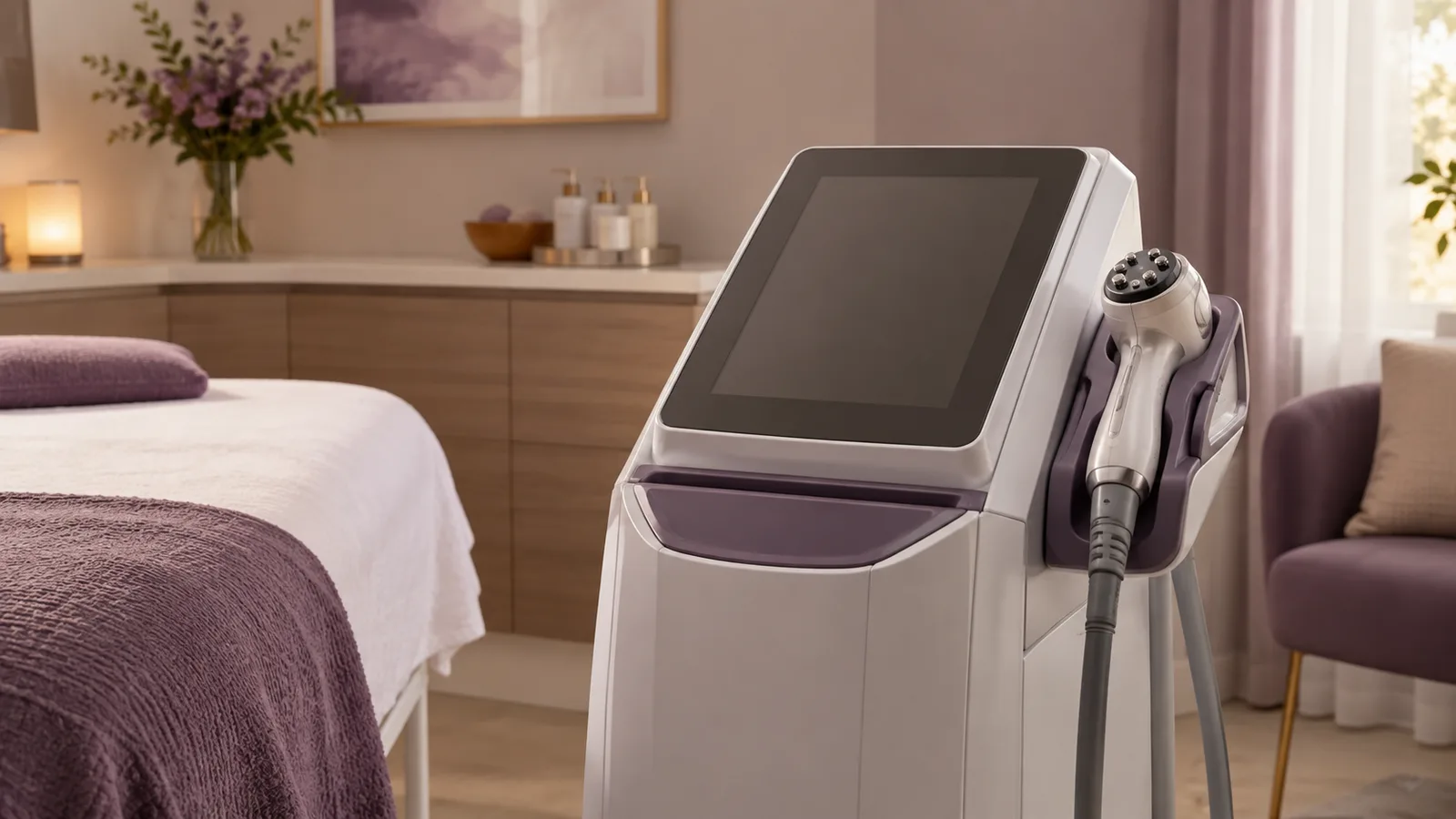
Radiofrequency tightening is sold two ways in Los Angeles. One clinic describes a single annual treatment with a monopolar device. Another describes a course of four to six sessions with a smaller handpiece or with microneedles that deliver the energy under the skin.
A reader who has had one quote of each kind wants to know which is true, and whether the difference is the device or the business model.
The question comes up often around Hancock Park because the treatment is common, the machines look alike, and the schedules do not.
This page is part of the thread lift and lifting topic, and it deals with the schedule alone: how many sessions, how far apart, and what decides it.
The short answer
The short answer
It depends on the device. High-energy monopolar systems are usually a single session, repeated roughly once a year. Lower-energy handpieces and radiofrequency microneedling are usually a series of three to six sessions about a month apart, followed by maintenance.
Neither approach is more legitimate than the other; they deliver different amounts of energy per visit. A quote for a series with no device name, no manufacturer protocol and no maintenance plan is worth a second opinion.

About us
About these answers
The session counts here come from manufacturers' published protocols and device clearance letters, compared with the consent forms Los Angeles clinics use, by independent editors in Hancock Park.
The desk holds no medical license and sells no treatment. Where a page and a licensed clinician who has examined you disagree, the clinician is right.
What decides the answer
Radiofrequency heats the dermis and the layer beneath it to a temperature that makes collagen contract and prompts new collagen over the following months. How much heat reaches the target in one session is the whole story.
A monopolar device with a large treatment tip and built-in cooling can deliver a high dose deeply in one sitting, which is why those protocols are usually one treatment, repeated when the effect fades.
Bipolar and multipolar handpieces run at lower energy near the surface, and the manufacturers of those devices write their protocols as a series, because each session delivers less.
Radiofrequency microneedling sits in between. The needles carry energy past the epidermis into the dermis, so each pass is efficient, but the treated area per pass is small, and the protocols are almost always three sessions about a month apart.
The reason is biological as much as commercial. Collagen remodeling takes eight to twelve weeks to show, and stacking sessions within that window builds on a response that is still under way.
Skin thickness and starting laxity move the number. Thin skin on the neck tolerates less energy per session, so it is often treated in more sessions at lower settings.
Heavier laxity on the lower face needs more total energy, and a clinician may reach it either with one high-energy session or several moderate ones. Pain tolerance matters too.
The high-energy single-session protocols are uncomfortable enough that some clinics use a topical numbing cream and a fan, and a patient who cannot tolerate the heat may end up on a series by default.
Finally, the schedule depends on what "done" means. The visible change from any radiofrequency device is modest, and the published series report it as a few millimeters of lift or a measurable change in skin firmness at six months.
Whether that is one session or four, most protocols assume a maintenance session every nine to eighteen months. A clinic that quotes a series but never mentions maintenance is leaving out half the calendar.
Local news coverage from outlets such as NBC Los Angeles occasionally reports on med spa complaints, and the recurring theme in those stories is a schedule that was never explained in full.
Expert note
Device clearance letters for radiofrequency systems describe indications such as non-invasive treatment of wrinkles or, for microneedling systems, coagulation of soft tissue.
Clinicians read "tightening" into those words, and the professional literature broadly supports a modest firming effect, but the clearance itself does not specify a session count. That comes from the manufacturer's clinical protocol and from the clinician's judgment about the individual face.
Consent forms for these treatments list burns, blistering, fat loss under the treated area, temporary numbness, and post-inflammatory pigment change in darker skin.
The risk of a burn rises with energy per session, which is one reason a cautious clinician treating thin or dark skin will choose a series over a single high dose.
The downtime after each session is short, and some patients treat the rest of the day as a quiet one.
The galleries at the Museum of Contemporary Art are the sort of indoor, low-sun destination that suits a face that has just been heated.
Anyone comparing clinics across the city, including the Westside, can check a business license through the relevant city's portal, and Santa Monica's is an example of how a city publishes that record.
None of this replaces an examination. The number of sessions a particular face needs is a clinical decision, and this page is general information from an independent publication, not medical advice.
Next steps
After the first check, the better question is which device the clinic uses and what the manufacturer's own protocol says. The protocol is public for most devices and the clinician should know it.
If the quoted schedule differs from the manufacturer's, the reason should be specific to the reader's skin, not to the clinic's price list.
It is also fair to ask how the clinic measures the result, since a treatment with no baseline photo cannot show whether a second session added anything.
Asking a clinic to name the device, its cleared indication and the number of sessions the manufacturer recommends is a reasonable test of how it talks about energy treatments, whether it is a neighborhood med spa or a physician-led practice in Los Angeles. The answer should take under a minute.
Any reader planning a series can also think about the calendar: each session brings a day or two of redness and swelling, and some people prefer to schedule around events, travel and the summer sun.
Public agencies publish planning material for very different purposes, and the readiness checklists from FEMA are a reminder that a plan written down in advance holds up better than one improvised on the day.
Where this answer stops
The counts here describe manufacturers' protocols, not a plan for one face. Skin thickness, laxity and tolerance move the number in both directions, and the clinician who has examined the skin sets it.
Before booking
Ask for the device and the protocol
Name the device, its cleared indication and the number of sessions the manufacturer recommends; any clinic that knows its own equipment can answer in under a minute.