
Question
How Skin Is Prepared in the Month Before a Peel
Sunscreen, retinoid priming, pigment suppression and the week when everything stops, in the order a pre-peel calendar runs.

A chemical peel is judged on the day of treatment, but most of the result is decided in the four weeks before it.
Patients booking a first medium-depth peel in Hancock Park tend to ask this question late, often a week out, when the useful window has mostly closed.
The answer matters because preparation changes three things: how evenly the acid penetrates, how much pigment the skin lays down while healing, and how quickly the surface closes over.
This page sets out what a typical pre-peel month looks like, what each step is for, and which parts are negotiable. It sits within the resurfacing questions topic, where the depth and timing questions are answered separately.
The short answer
The short answer
Skin is prepared for a peel by thinning and evening the outer layer, quieting pigment cells, and removing anything that would make the acid act unpredictably. That means daily sunscreen, a retinoid for two to three weeks, and a pigment suppressant for darker skin.
All of it pauses in the last several days, and waxing, threading, laser hair removal and other peels stop for the whole month. The clinician sets the exact schedule, and it changes with peel depth and skin type.

About us
About these answers
This answer was written from published peel protocols, consent forms for medium peels and the pre-treatment sheets Los Angeles clinics hand out, read side by side by independent editors in Hancock Park.
Nobody here holds a medical license, and nobody here treats patients. Decisions about a particular face belong with a licensed clinician who has examined it.
What decides the answer
Peel depth comes first. A superficial glycolic or salicylic peel needs little more than sunscreen, a clean face and a pause on exfoliants for a few days. A medium-depth trichloroacetic acid peel or a Jessner combination needs the full month.
Deep phenol peels sit outside this page; they are a physician-only procedure with their own workup.
Skin type comes second. The Los Angeles patient population runs across the whole Fitzpatrick range, and the darker the skin, the longer the pigment-suppression phase and the more conservative the peel choice.
A clinician who treats many skin types will often start hydroquinone or a non-hydroquinone alternative four weeks out for a type IV or above, and may push the peel date back if any recent tan is visible.
History comes third. Cold sores are the item people forget. A peel on the face can wake a dormant herpes simplex infection, and the standard precaution is an antiviral started a day or two before treatment in anyone with a history.
Recent isotretinoin use, keloid scarring, and any active skin infection are the other flags that change or delay the plan.
A month is long enough to feel like idle time, and a good use of an indoor weekend during the sun-avoidance phase is somewhere with no UV at all.
The Exploratorium is a hands-on science museum in San Francisco, a longer trip than most will make, but it shows the kind of destination that keeps a sun-avoiding patient occupied.
The reason the schedule is written down in advance is that each step has a lead time. Retinoids take two to three weeks to thin the surface. Pigment agents take about the same to slow melanin production.
Sunscreen works from day one but only if the habit is formed before the peel, because the weeks after are when the skin is most reactive to light.
Planning the month is closer to route planning than to skincare, and the way the Department of Transportation publishes a plan with dated milestones is a fair model for how a clinic should hand over a pre-peel calendar.
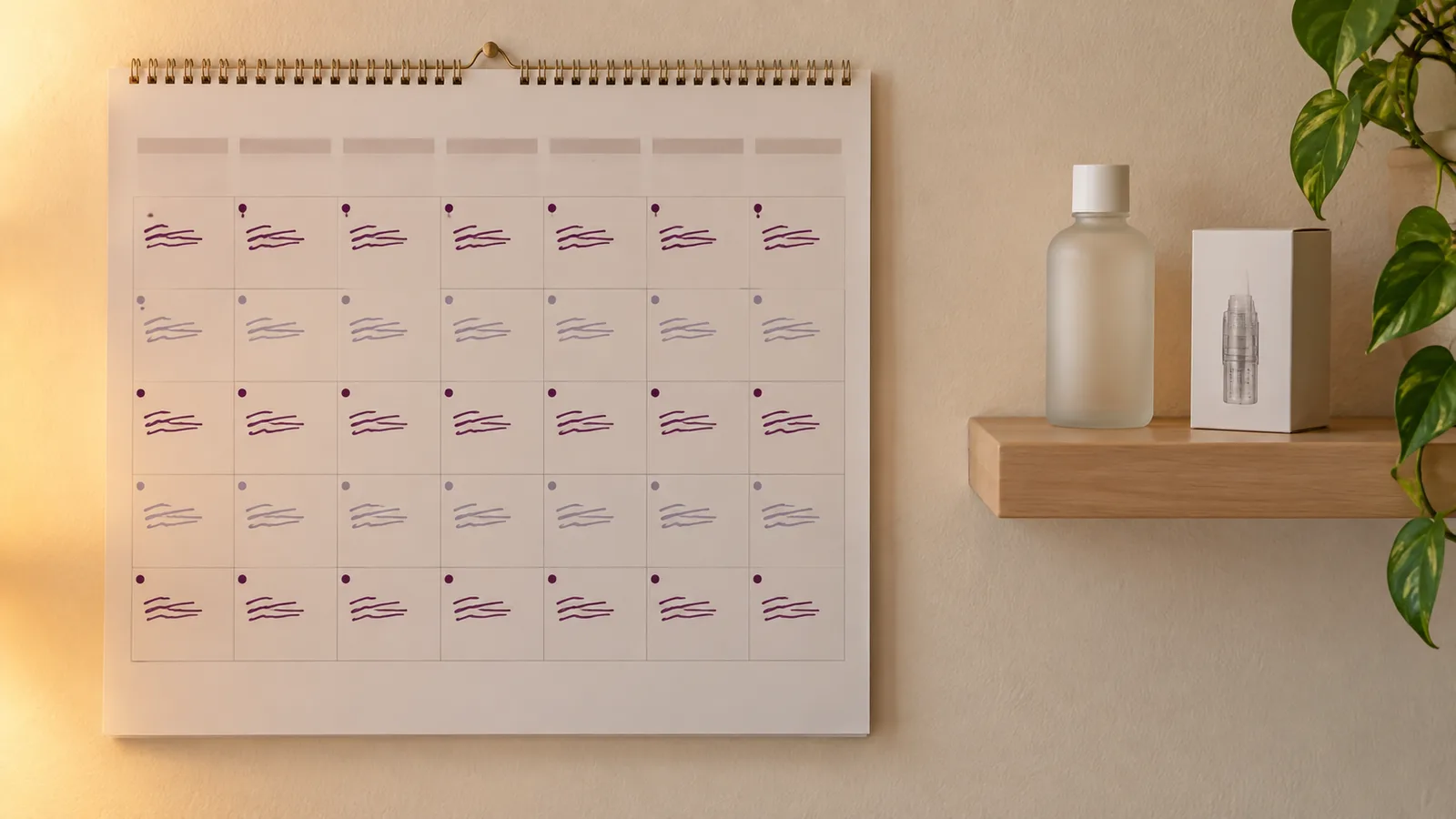
A simple version of that calendar, for a medium peel on a patient with no complicating history, runs like this. Weeks four and three: broad-spectrum sunscreen every morning, retinoid or hydroxy acid every night, pigment suppressant if indicated, no waxing or laser.
Week two continues the same, with the clinician checking for irritation and adjusting frequency. In the final five to seven days the retinoid and acids stop, sunscreen and the pigment agent continue, and the antiviral starts if the physician ordered one.
The day before: no scrubs, no shaving on the treatment area, no new products.
Expert note
The published peel protocols agree on the aim and disagree on the details, so the schedule a patient receives will not match this page exactly. Two points are consistent.
First, priming with a retinoid or a hydroxy acid gives a more uniform frost on the day, because the outer layer is thinner and more even, and a uniform frost is the visual sign the clinician is watching for.
Second, the retinoid is stopped before the peel itself, commonly five to seven days out, because skin still under its influence can take the acid deeper than intended.
Pigment suppression is the step most often skipped and most often regretted. Consent forms for medium peels list post-inflammatory hyperpigmentation as a known outcome, and the pre-treatment weeks are when its odds are reduced.
A patient with Fitzpatrick type IV to VI skin, or a past episode of melasma, should expect the clinician to raise this without being asked. If it isn't raised, that is worth a question.
Next steps
The useful move a month out is to ask for the written schedule and the reason for each line on it.
A clinician who can explain why the retinoid stops on a particular day, and what a patient with this skin type is being protected from, is describing a plan rather than a habit.
Patients who work from home in the neighborhood often find the sun-avoidance phase easier than expected; a peel week with the blinds down and KCRW on in the background is a common description.
The follow-up question most people have is which depth to choose in the first place, and that is answered at what depth of peel suits a first-time patient. Nothing here replaces the instructions a treating clinician gives for a specific face.


Before booking
Ask for the written schedule
A clinician who can say why the retinoid stops on a particular day is describing a plan rather than a habit. The next decision is depth, answered at what depth of peel suits a first-time patient.