
Question
Can Microneedling and Peels Be Alternated?
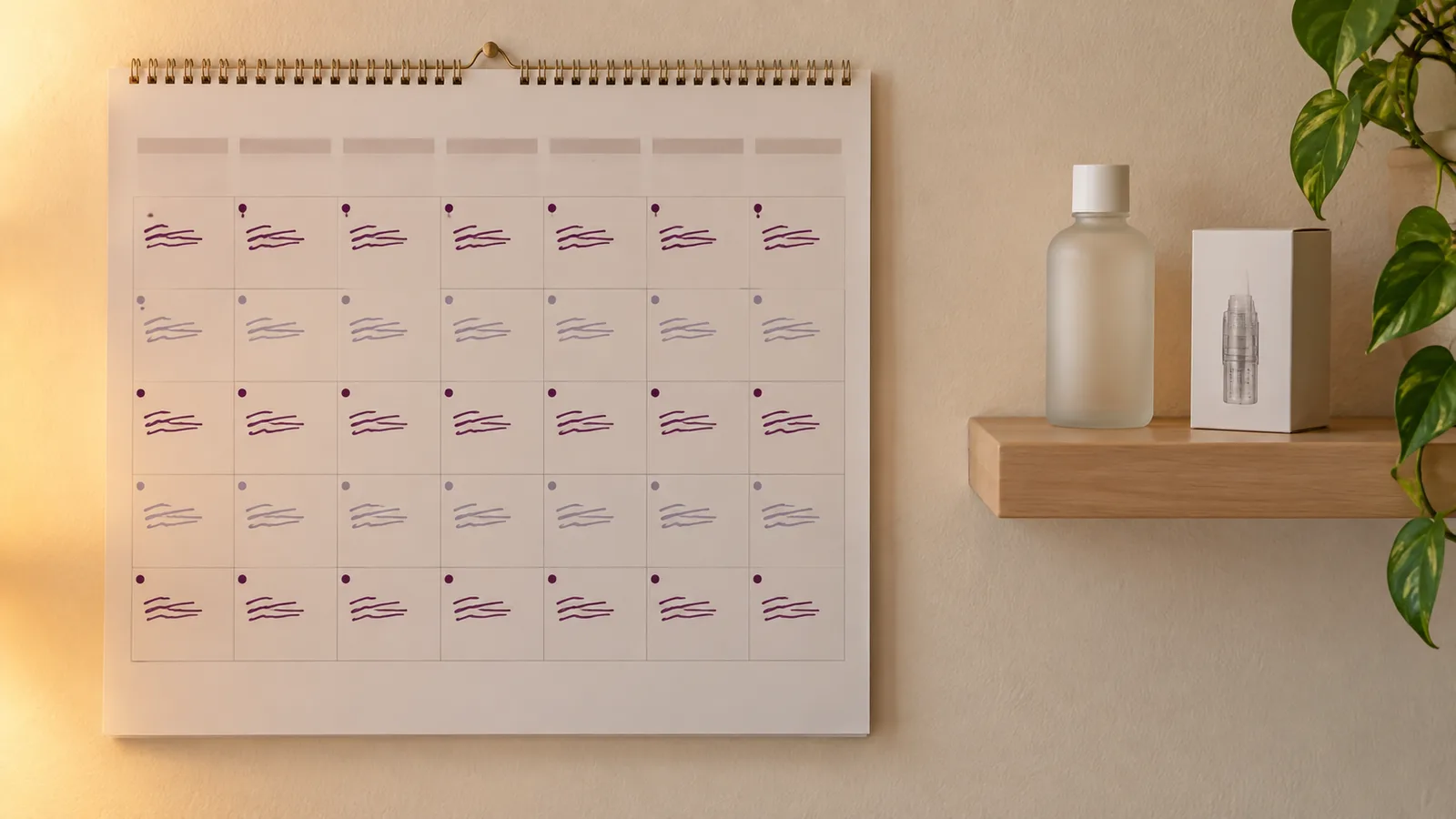
Peels work from the top down and needling from the surface in; the interval between them is where most alternating plans go wrong.
Patients who have started on one resurfacing method and read about the other usually arrive at this question within a few months.
The two treatments reach the skin differently: a peel removes layers chemically from the top down, and needling creates columns of injury from the surface into the dermis.
Alternating them is common practice in Los Angeles clinics, and it can work well, but the timing rules are stricter than most package brochures suggest.
This page belongs to the resurfacing questions topic. It assumes medical-depth needling and superficial to medium peels; deep peels are a separate case.
The short answer
The short answer
Yes, with spacing. Microneedling and superficial or medium peels can be alternated when at least two to four weeks separate them and the skin has fully re-formed its barrier between treatments. The pairing suits patients with both indented scarring and surface pigment.
It adds little for a single concern, and it is planned more conservatively in darker skin types. The clinician sets the order, the interval and the peel strength after seeing the skin.
Follow-up questions
Can a peel be done the same day as microneedling?
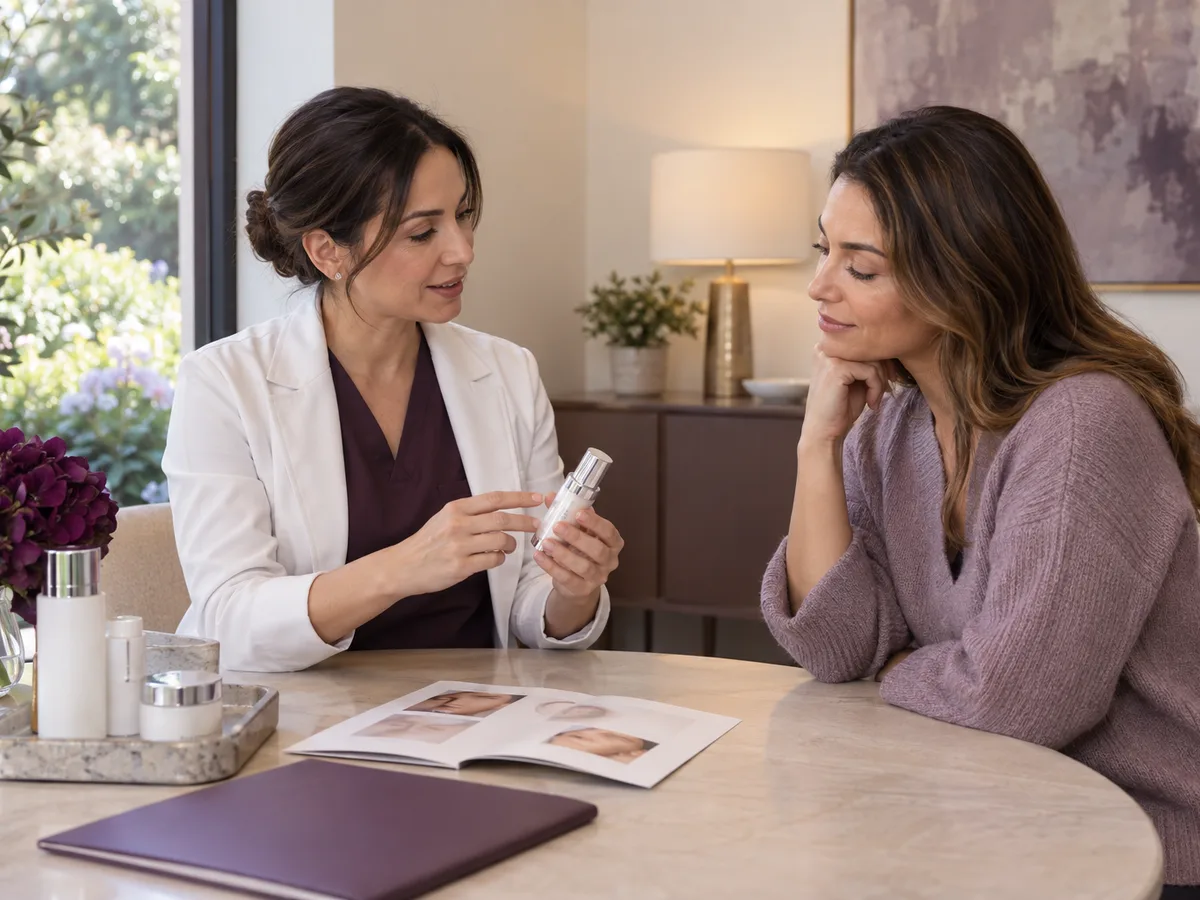
Some clinicians apply a very light acid immediately after needling as a single combined procedure. It is a distinct technique, done with lower acid strengths and closer monitoring, and it is not the same as alternating a full peel and a full needling session.
It belongs in the hands of a clinician who does it routinely and who has explained the added pigment risk.
Which should come first for acne scars with dark marks?
Most protocols start with needling for the scar depth and follow with a light peel a few weeks later to clear the pigment. Where the marks are the main complaint and the scars are shallow, the order is sometimes reversed.
The clinician's reasoning matters more than the order itself.
About us
About these answers
This answer was written from the published combination series in acne scarring and the consent forms for medium peels and medical needling, read by independent editors in Hancock Park.
No medical license sits behind these pages, and no practice pays for them. A licensed clinician who has examined the face is the person to decide with.
What decides the answer
The first thing to settle is what each treatment is for. Needling is the stronger tool for indented scarring and general firmness, because it works in the dermis where collagen is made.
Peels are the stronger tool for surface pigment, dullness, fine lines and the outermost texture, because they work on the epidermis and, at medium depth, the upper dermis. If one concern dominates, alternating adds recovery time without adding much result.
If both are present, which is typical in adult acne scarring with post-inflammatory pigment, the pairing makes sense.
The second thing is the interval. Skin that has been needled is an open wound for a day and a healing wound for about a week; skin that has had a medium peel is peeling for a week and pink for longer.
Applying acid to a barrier that has not fully re-formed produces an uneven, unpredictable peel, and needling skin that is still shedding from a peel risks driving debris into the channels.
The usual minimum between the two is two to four weeks, and many clinicians prefer a full cycle of four to six weeks so that each treatment is judged on its own.
Which goes first is usually decided by the dominant concern. Where scarring leads, needling starts the series and a light peel follows a month later to clear the pigment the needling leaves behind.
Where pigment leads, a peel opens, and needling follows once the new surface has settled. Cost is a driver here, because two alternating series cost more than one and the return on the second is smaller.
The United Way of Greater Los Angeles publishes on household finances across the county and has no role in skin care, but its work is a plain reminder that an elective series is a budget decision too.
Skin type shapes the plan more than the brochure admits. In Fitzpatrick types IV to VI both treatments carry post-inflammatory hyperpigmentation risk, and stacking them shortens the recovery between insults. The conservative pattern is lighter peels, shallower needling, longer gaps and a pigment-suppressing routine throughout.
Sun avoidance is non-negotiable in the week after either treatment, which in this city means planning indoor days.
A shaded aquarium visit is the kind of outing that suits a peel week, and Cabrillo Marine Aquarium lists its hours for one down in the San Pedro harbor.
Expert note
The published combination series, most of them in acne scarring, report that needling followed by a light chemical peel produces better scar and pigment scores than either alone, with the peel applied a few weeks after needling once the surface has fully re-epithelialized.
Same-day combination, where a light acid is applied immediately after needling, appears in some protocols; it is a specific technique with its own risk profile and should not be confused with alternating sessions weeks apart.
The signals that the interval is too short are visible: prolonged redness beyond a week, a blotchy uneven peel, new brown patches over the treated area, or small pustules along needling lines.
Any of these is a reason to lengthen the gap, not to add a treatment.
Local reporting on health regulation appears from time to time in papers such as the Daily News, which is a general news outlet rather than a clinical source, and it is one way to notice when a facility has drawn regulatory attention.
Next steps
Before choosing a fix, the evidence to check is the clinician's own reasoning for the sequence: which concern is being treated by which tool, at what interval, and what the sign will be that one of the two is doing the work.
Families who plan around a school year sometimes lay the alternating calendar over a district calendar such as the one Pasadena schools publish, which is a school district site and useful here only as a planning grid.
A practice that offers both peels and needling should be able to say which of the two it would drop if the calendar only allowed one, and why.
Where this answer stops
The intervals here are the ones the combination series report, not a schedule for one face. Skin type, the dominant concern and how the last treatment healed move them, and the clinician who has examined the skin sets the order.




About us
How these pages are written
Our editors are independent readers in Hancock Park, and none holds a medical license or works for a clinic. They read the combination series alongside the consent forms clinics use for each half of the pairing.
Which treatment goes first on a given cheek is set by the licensed clinician who has seen it.
Before booking
Ask which one the clinician would drop
If the calendar allowed only one of the two, which would it be, and why; the answer shows which concern is being treated by which tool. It is a fair question for a Los Angeles practice offering skin rejuvenation, or for any clinic that offers both treatments.