
Question
Who Supervises Treatment at a Med Spa?
What California requires the supervising physician to do, and how real supervision looks from the patient's chair.

The word "supervised" appears on most med spa websites in Los Angeles and means something different at each one. At some practices the supervising physician examines every new patient and is in the building during treatment hours.
At others the physician is a name on a document, reachable by phone, who has never met the patient. Both arrangements can be lawful in California. Only one of them is what most readers picture when they read the word.
This page, part of the med spa standards topic, explains who is allowed to supervise, what the state requires that person to do, how the arrangement should look from the patient's chair, and the questions that separate real supervision from the nominal kind.
The short answer
The short answer
In California, treatment at a med spa must be supervised by a physician, and the examination before a first treatment must be done by a physician, nurse practitioner or physician assistant. Registered nurses inject under written standing orders with a physician reachable during the appointment.
The business must be physician-owned or structured as a professional medical corporation. A patient can confirm real supervision by asking for the medical director's name, who will do the examination, and whether a physician is reachable during treatment.

About us
About these answers
This answer follows the Medical Board of California's published positions on the Good Faith Exam, delegation and ownership, and the disciplinary summaries the board publishes, read by independent editors in Hancock Park.
No one on the editorial side holds a medical license or works for a clinic. What is written here prepares a consultation; a licensed clinician who has seen the skin makes the call.
What decides the answer
California's rule is built around one event: the examination before the first treatment, often called the Good Faith Exam. A physician, nurse practitioner or physician assistant must examine the patient, take a history, decide the treatment is appropriate and write the order.
Only after that may a registered nurse pick up the syringe. The exam can be done in person or, in some settings, by video, and it is the point at which a clinician takes responsibility for the plan.
Supervision after the exam is defined by license. A physician supervising registered nurses must have written standing orders or protocols, must be available for consultation while treatment happens, and answers for the nurses' work.
Nurse practitioners operate under standardized procedures agreed with a physician, and physician assistants under a practice agreement.
The physician does not have to stand in the room, but the practice must be able to reach them, and the Medical Board of California has disciplined physicians who lent a license to a business they never visited.
Ownership is the part patients rarely ask about.
California's corporate practice of medicine rules mean a med spa offering injectables must be owned by a physician or a professional medical corporation; a lay owner may run the business side under a management agreement but may not direct clinical decisions.
A practice where the person deciding how much filler to sell is not a clinician has a structural problem, whatever the licenses on the wall say.
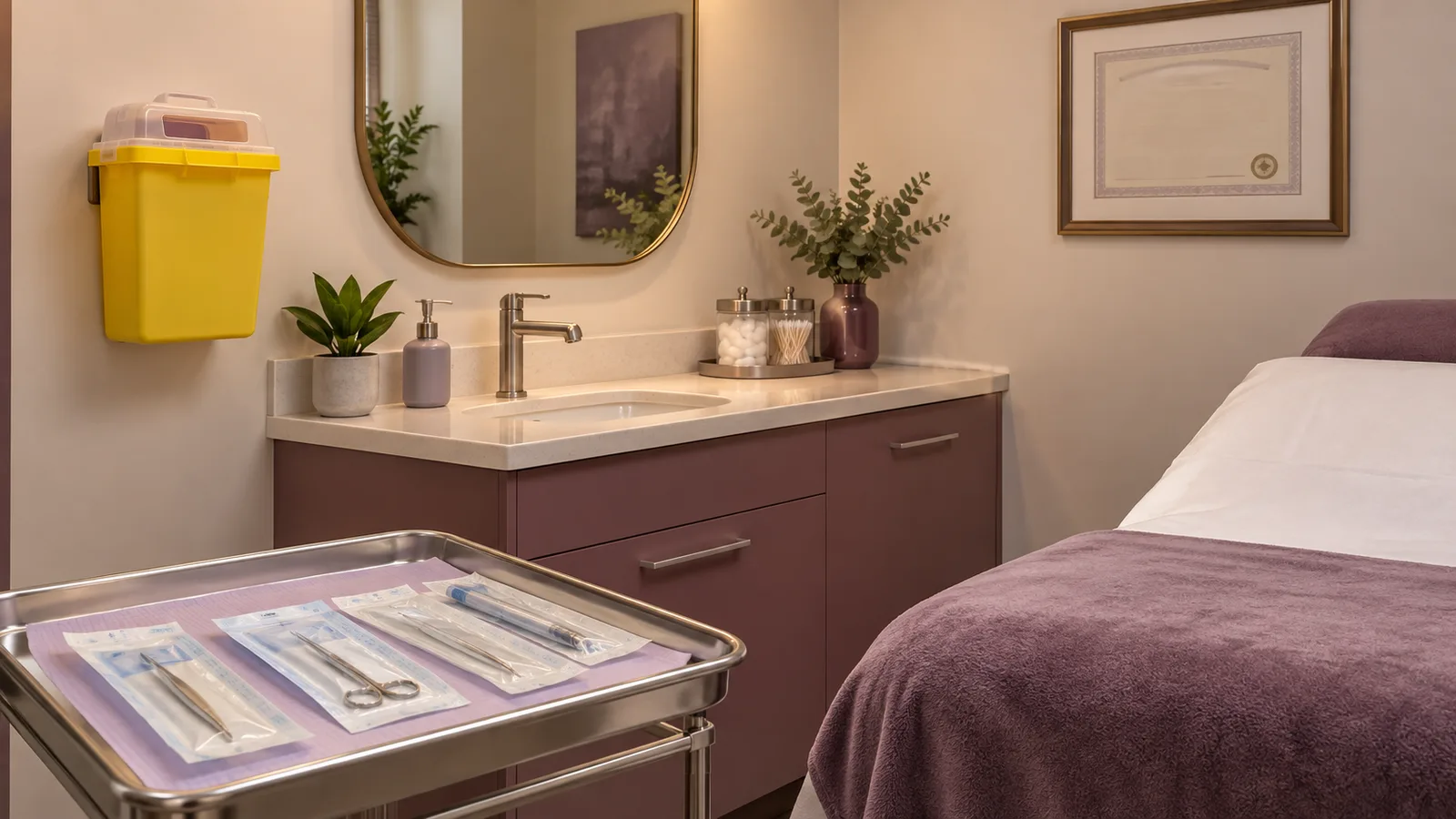
From the patient's side, real supervision has a visible shape. The medical director's name is known to the front desk. The Good Faith Exam happens with a clinician, not a form.
The treatment plan is reviewed when a new area or a new product is added, rather than at the first visit alone. Records are kept in a way the supervising physician can read. Organizations that publish who is accountable for what tend to behave better.
The pattern is as visible in a member-supported public station such as KCRW, which lists its leadership publicly, as in a medical practice that names its director on the consent form.
Standards bodies work the same way. The International Telecommunication Union names the group responsible for each technical standard it publishes, and a reader who wants a model for what accountable delegation looks like on paper can find it there.
A med spa's standing orders are its version of that document: who may do what, under whose authority, and what happens when the case falls outside the protocol.
Expert note
The distinction clinicians draw is between supervision as a legal structure and supervision as a clinical habit. The structure is satisfied by documents.
The habit shows in whether the supervising physician reviews photographs, sees patients whose results are unusual, and is the person who manages a vascular occlusion when one happens.
Published complication reports repeatedly describe delayed treatment where the injector had to locate a physician they had never worked alongside, and that delay is the practical cost of nominal supervision.
Neighborhood-level accountability is a useful comparison. A body such as the Mid City neighborhood council posts its agendas, names its board and takes public comment, and residents can see who decided what.
A patient deserves the same visibility into who decided their treatment plan, and asking for it is reasonable rather than rude.
Next steps
From an expert answer angle, the useful next step is to ask three questions at booking and listen to how quickly they are answered. Who is the medical director? Who will carry out the examination before the first treatment, and what is that person's license?
Is a physician reachable during the appointment, and has the injector ever had to call one? The same test applies to any clinic in the city; the point is the test, not the name.
Answers that come without hesitation and match the licenses on the wall are the standard. Answers that route through "our medical director handles all that" without a name are not.
A patient who is spending a recovery day indoors after a treatment can use the time to read the practice's consent form again with these questions in mind, or simply spend it somewhere cool and out of the sun, such as the Grammy Museum downtown.
Either is a better use of a swollen afternoon than a second appointment booked in a hurry.
Where this answer stops
The framework here is California's, described in general terms, and it is not legal or medical advice. Whether a particular practice meets it is a matter of its own documents, and the clinician who examines a patient answers for the plan.


Before booking
Ask three questions at booking
Who is the medical director, who will carry out the examination before the first treatment, and is a physician reachable during the appointment. Any clinic should answer them on the first call, and My Aesthetic Doctor is one Los Angeles practice to try them on.