
Question
Facility Standards That Should Be Visible at a Med Spa
Licensing on the wall, hygiene in the room and an emergency plan that has to be asked about, in the order a visit presents them.
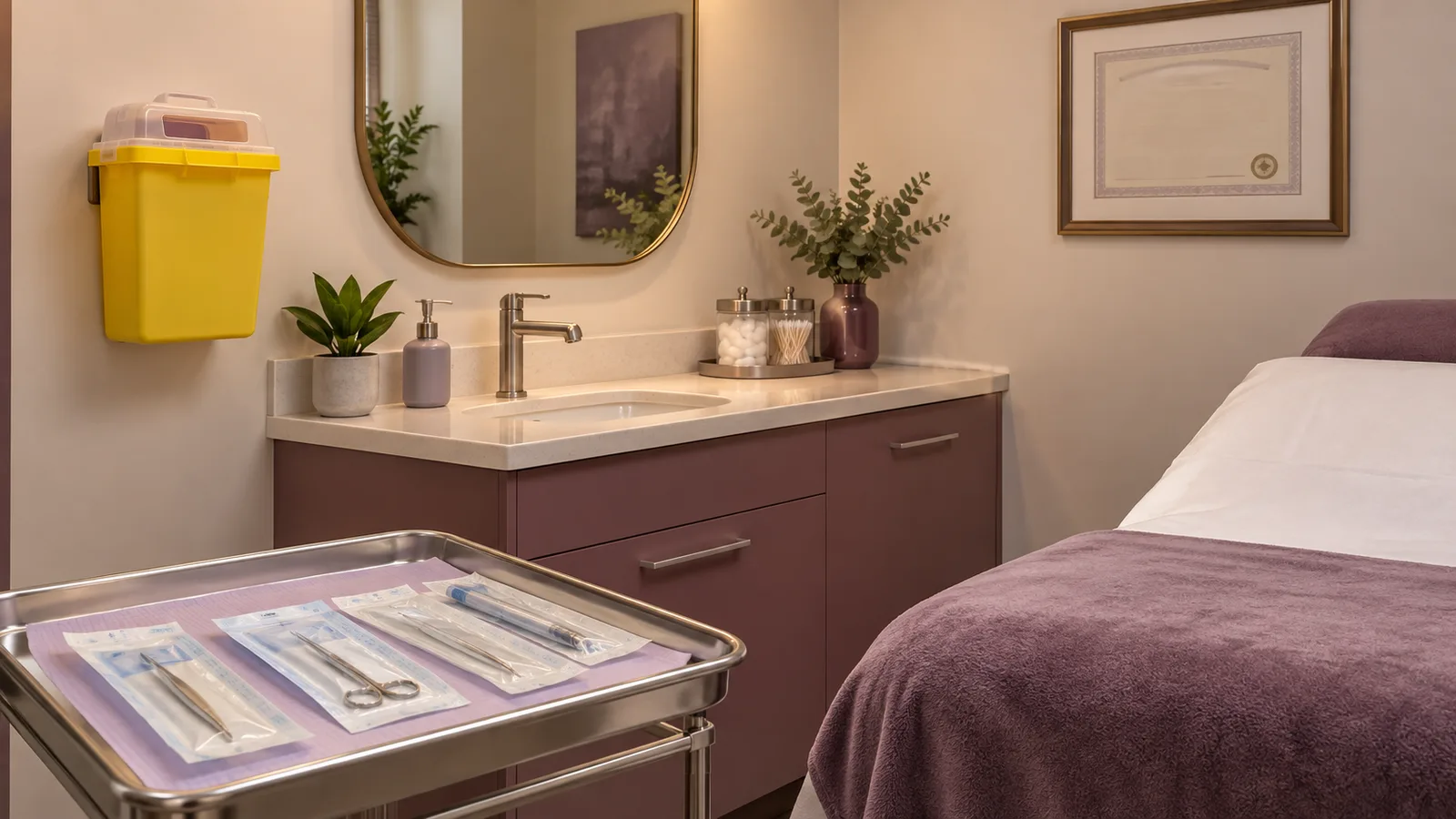
A first visit to a med spa is a visual test before it is anything else.
The reader who asks this question usually has a consultation booked somewhere in central Los Angeles and wants to know what to look at while sitting in the waiting area.
The answer is that most of the standards that matter can be seen from a chair, and the ones that cannot be seen can be asked about in one sentence each.
This page belongs to the med spa standards topic.
It sets out what should be on the wall, what should be in the treatment room, what a front desk should be able to produce on request, and where a patient draws the line between an untidy office and an unsafe one.
The short answer
The short answer
A med spa in California should show professional licenses that match the people working, name its supervising physician, and keep a visibly clean treatment room with a sharps container, sealed needles and labeled product.
It should be able to describe its emergency plan for a vascular occlusion, including hyaluronidase on site, and its consent forms should name specific risks. Anything the reader cannot see can be asked about, and the clarity of the answer is itself the standard.
About us
About these answers
This answer was written from the Medical Board of California's published positions, consent paperwork from Los Angeles practices and the plain-language standard federal agencies are held to, by independent editors in Hancock Park.
Nobody here holds a medical license, and nobody here treats patients. Decisions about a particular face belong with a licensed clinician who has examined it.
What decides the answer
Put plainly, the answer here is that facility standards fall into three groups: licensing that must be displayed, hygiene that can be observed, and emergency readiness that has to be asked about.
A patient can work through them in the order the visit presents them.
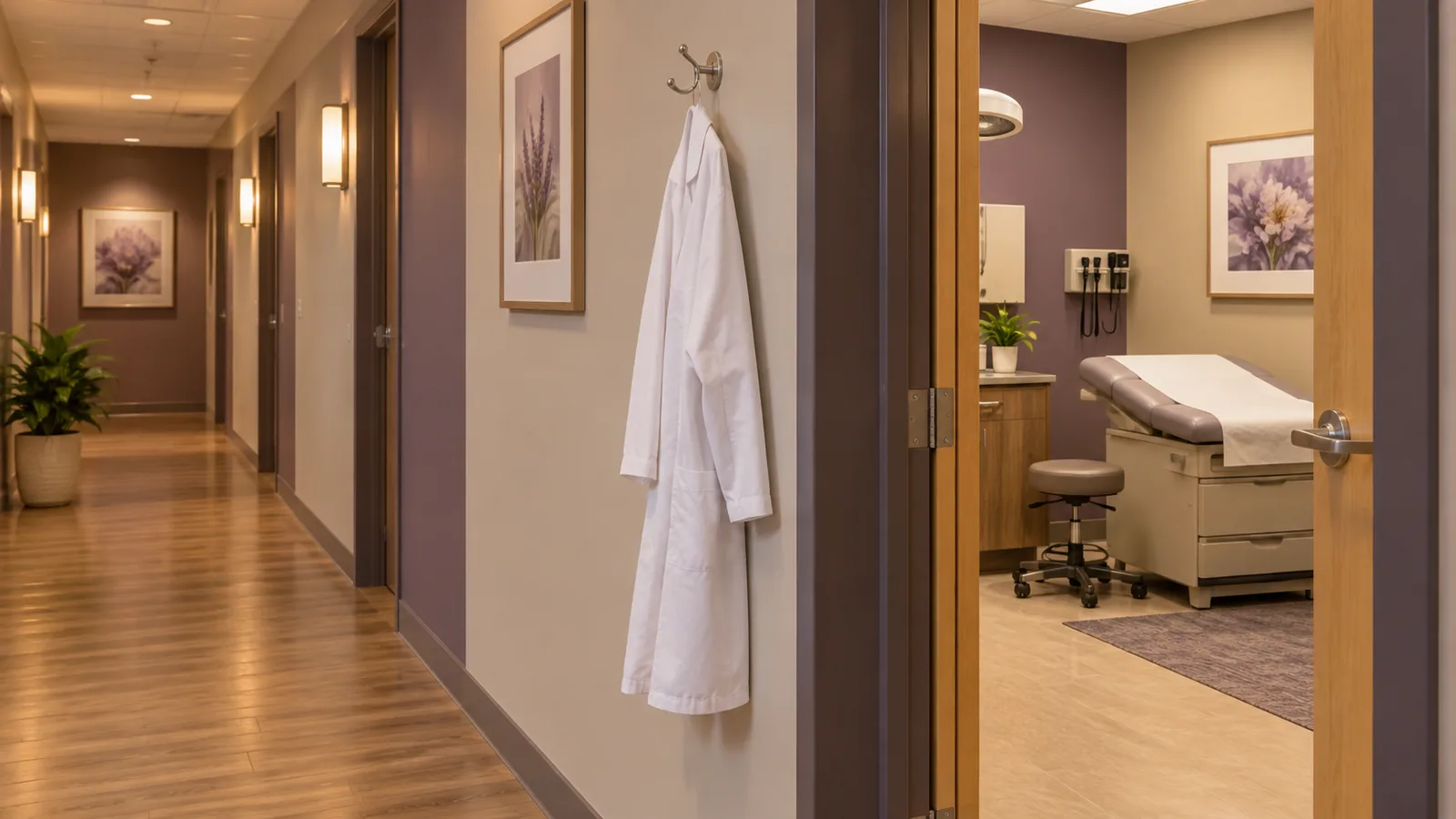
Licensing first. California requires professional licenses to be available, and most practices frame them in the entry or the treatment room.
The names on those licenses should match the people in the building, and the supervising physician's name should appear somewhere a patient can read it. A front desk that cannot say who the medical director is has answered the question already.
The injector credentials page covers what each license permits.
Hygiene second, and this is the visual part.
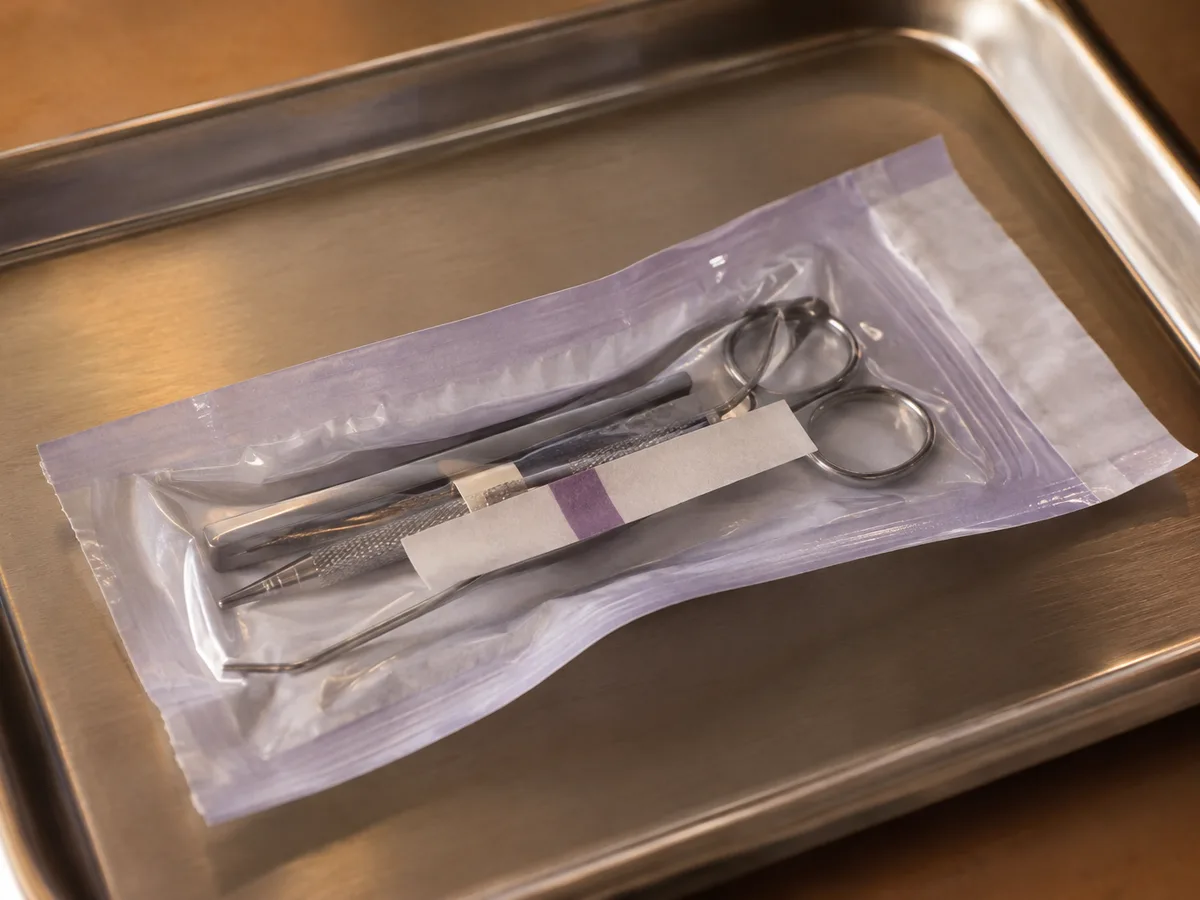
A treatment room should show a sharps container mounted or placed within reach of the chair, sealed single-use needles opened in front of the patient, gloves changed between the intake and the procedure, and a surface that has been wiped rather than tidied.
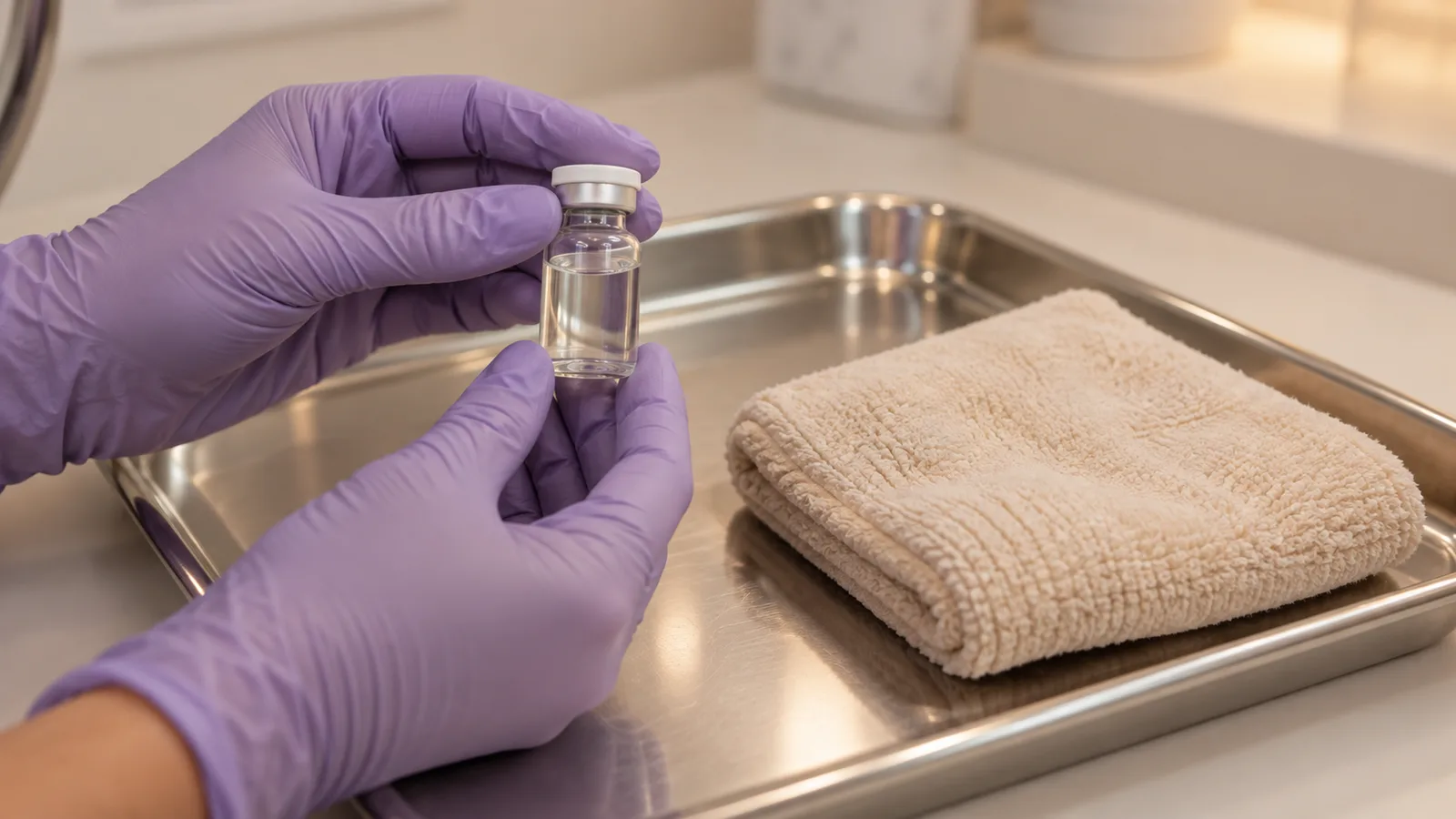
Product should come out of labeled, sealed packaging with a lot number, and the injector should be willing to show the box.
Hand hygiene at the sink or with a dispenser before gloving is the single most telling habit, because it is the one people skip when nobody is watching.
Emergency readiness third. A practice that injects filler should hold hyaluronidase on site, in date, and be able to say who is trained to use it and how quickly.
It should have a written protocol for a suspected occlusion and a physician reachable during treatment hours. This cannot be seen, so it is asked, and the quality of the answer is the standard.
A pause, then a clear description of the kit and the plan, is the right response. A reassurance that it never happens is not.
Two smaller signs round out the picture. Records should be kept, which means the patient's photographs, the product lot number and the injection sites are written down and can be produced at a later visit.
And the building should be reachable: a practice that has thought about step-free access and a wide enough treatment room has usually thought about the rest of its obligations too.
Neighborhood organizations such as the Los Angeles Neighborhood Land Trust work on how shared spaces are laid out and kept, and the same attention to a space's condition is what a patient is looking for in a clinical room.
The list, in one place. Displayed licenses that match the staff present, and a named medical director. A sharps container, sealed needles, fresh gloves and labeled product with a visible lot number.
Hyaluronidase in date, a written occlusion protocol and a physician reachable during hours. Photographs and injection records kept from visit to visit.
Expert note
California treats a med spa as a medical practice, whatever the decor suggests. The Medical Board of California's published position is that injectables, lasers and medical-grade peels are the practice of medicine.
A physician, nurse practitioner or physician assistant must examine a patient before a first treatment, and the business itself must be owned in a way the state's corporate practice rules allow.
None of that is visible on a wall, which is why the checkable signs below matter as a proxy.
Consent paperwork is the one document a patient reads in full. A form that names the product, the risks including vascular occlusion and infection, the alternatives and the plan for a complication is written by someone who expects to be held to it.
A form that reads like a waiver for a gym is a different signal. The federal plain-writing standards are a fair model for what clear written material looks like, and a consent form that would pass that test is doing its job.
Next steps
Before choosing a fix, the evidence to check is the practice's own answer to three questions: who examined the patient before the first treatment, who is supervising today, and what happens if something goes wrong in the chair.
Any practice should be able to answer all three without looking anything up, and a reader can use that as a fair test rather than a recommendation.
Digital access is part of the same test. A practice whose forms and booking pages can be read by anyone, including patients using screen readers, has thought about its patients as people with different needs.
The federal accessibility standards described at Section508.gov show what that looks like when a public body takes it seriously. The next question most readers ask is about complication cover, which follows directly from the emergency readiness point above.
Where this answer stops
A visible checklist tells a patient how a room is run, not how a face will be treated. The examination California requires before a first treatment is where a licensed clinician takes over from the checklist.


Before booking
Put the three questions to the front desk
Who examined the patient before the first treatment, who is supervising today, and what happens if something goes wrong in the chair. The test is fair for any clinic in the city; one Los Angeles practice to put it to is My Aesthetic Doctor.