
Question
Does Dissolving Filler Damage the Tissue?
What hyaluronidase does to the filler, to the body's own hyaluronic acid, and to the mirror on day three.
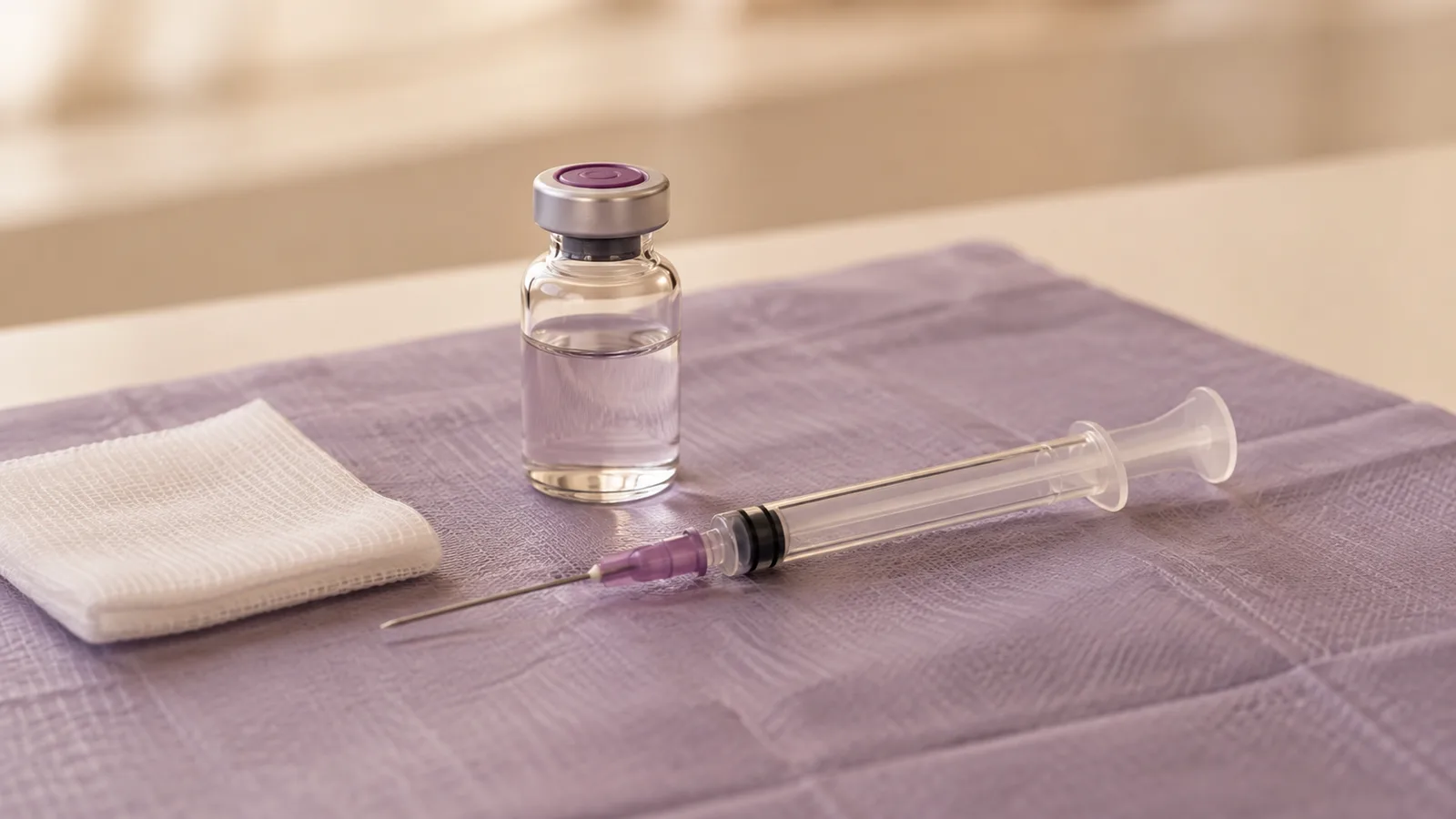
Hyaluronidase is the reason hyaluronic acid filler is described as reversible, and the reader asking this question has usually reached the point of wanting some of it gone.
The worry underneath is specific: whether the enzyme that breaks down the filler also breaks down the face around it, leaving the skin looser or thinner than before the filler went in.
The answer from the published series is reassuring in the main, with two caveats that deserve their own paragraphs.
This page belongs to the complication signs topic. It explains what hyaluronidase does, what it does to the body's own hyaluronic acid, what patients see in the days after dissolving, and the situations in which the tissue can look worse for a while.
The short answer
The short answer
Hyaluronidase breaks down hyaluronic acid, both the injected gel and the body's own, but the body's own supply is replaced within days while the filler is not. Published follow-up does not show lasting loss of native tissue at cosmetic doses.
What patients see is a temporary deflation, sometimes the volume loss the filler was hiding, and occasionally swelling or an allergic reaction to the enzyme. The tissue is not damaged in the sense the question means, but the face may look older for a while.

About us
About these answers
This answer follows the published follow-up series on hyaluronidase, the manufacturer documentation for filler and its reversal agent, and the consent forms of careful practices, read by independent editors in Hancock Park.
Our editors hold no medical license and have no clinic to defend. Take the page to a licensed clinician who has examined you, and let that examination outrank it.
What decides the answer
Hyaluronic acid is a natural molecule found throughout the skin, and hyaluronidase is an enzyme that cuts it into fragments the body clears. Injected filler is hyaluronic acid that has been cross-linked so it lasts months to years instead of days.
The enzyme does not distinguish between the two, so it clears native hyaluronic acid in the treated area along with the filler. The difference is what happens next. Skin cells make fresh hyaluronic acid continuously, and the native supply returns over a few days.
The cross-linked gel does not come back.
That is why the days after dissolving can look alarming. The area is flatter than it was with filler and, for a short period, flatter than it was before any filler, because the native cushion has been cleared too.
Fine lines can look deeper and skin can look crepey. The published series and the consent forms of careful practices both describe this as temporary, with the skin's appearance returning to its pre-filler baseline over one to two weeks as native hyaluronic acid is rebuilt.
Two caveats change the picture. The first is dose and repetition. Dissolving a single lump takes a small amount of enzyme in one visit.
Dissolving years of layered filler across the midface can take large doses over several sessions, and a few reports describe prolonged hollowing after aggressive dissolving, though whether that reflects tissue change or the unmasking of age-related volume loss the filler had hidden is disputed.
The second is the individual reaction. Hyaluronidase is a protein, allergic reactions occur in a small proportion of patients, and practices commonly do a test dose when there is time, which there is not during a vascular occlusion.
Filler and its reversal agent both come with manufacturer documentation on dose, timing and expected appearance afterward, and a consent form should reflect what that documentation says rather than a shorter version of it.
There is no return to a wholly untreated state, and readers should hear that clearly.
Filler that sat in tissue for years may have stretched the skin over it, and once the volume is gone that skin needs time to retract, which it does less completely in older or sun-damaged skin.
Some patients find that the dissolved area looks acceptable within a fortnight. Others find they now see the volume loss the filler was covering and decide, after a pause, on a smaller amount of fresh product.
Expert note
The clinicians who write on this subject distinguish between tissue damage, which the evidence does not support at cosmetic doses, and tissue change, which is real and mostly cosmetic.
That change is temporary loss of native hyaluronic acid, unmasking of pre-existing volume loss, and slower skin retraction where filler had been in place for years.
Consent forms from well-run practices describe all three so the patient is not surprised by the mirror on day three.
The second clinical point is timing. Hyaluronidase acts within hours, but the visual settling takes longer, and re-filling too soon is a common regret.
Most published guidance suggests waiting at least a week, and often two, before placing new product, and taking photographs across that window so the decision is made against evidence rather than a bad first morning.
Product documentation of this kind follows the same logic as a published technical standard, and the American National Standards Institute coordinates how such standards are written and reviewed in the United States.
For readers who want the biology in more depth, the anatomy and physiology courses listed by Los Angeles Harbor College show the level at which hyaluronic acid turnover is usually taught. That is a useful check on how much of the marketing around dissolving is simplified.
Next steps
Before choosing a fix, the evidence to check is the reason for dissolving. An occlusion is an emergency and the dose is whatever it takes.
A migrated lip filler or a puffy under-eye is elective, and a slow approach with small doses across visits, photographs at each stage and a test dose first is the pattern careful clinicians describe.
A patient considering dissolving can ask what dose is planned, how many visits are expected, whether a test dose will be done, and how the practice will photograph the area before and after.
The point is the quality of the answer rather than the name on the door.
Patients also benefit from thinking about the two weeks after.
Access matters if walking or driving is uncomfortable while the face is swollen, and the plain-language material at ADA.gov is a reasonable model for how a practice should describe its own step-free access and appointment flexibility.
Reading the scientific background on hyaluronic acid turnover is also possible for the curious; research universities such as Caltech publish accessible summaries of biomaterials work, which is the field this enzyme comes from.
Where this answer stops
What the literature reports about hyaluronidase is not a forecast for one face. How much filler is present, how long it has been there and how the skin retracts are read in person by the clinician who will dissolve it.



Before booking
Ask about dose, visits and the test dose
What dose is planned, how many visits are expected, whether a test dose will be done, and how the area will be photographed before and after. The four questions can be put to any practice that dissolves filler.