
Question
Which Scar Types Respond Least to Needling
Rolling, boxcar, ice pick, raised: which shapes needling lifts and which it leaves alone.
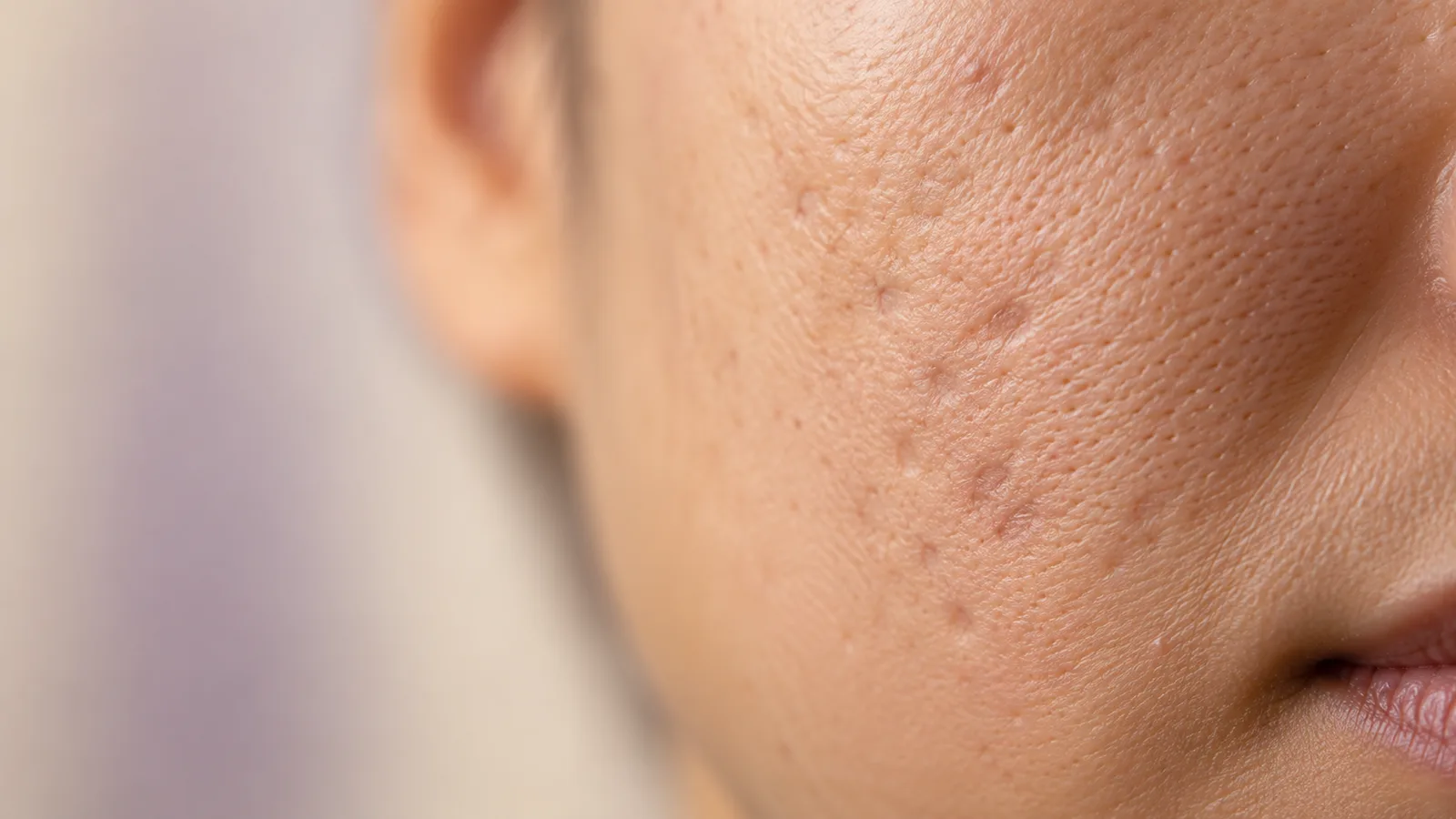
Acne leaves more than one kind of mark, and microneedling does not treat them equally. Readers in Hancock Park often arrive at a consultation with a photo of their cheek and a single word, scarring.
The surface is usually carrying three or four different scar shapes at once. Whether needling will help depends on which shapes dominate.
This page sorts the common acne scar types by how they tend to respond to needling. It explains why the poor responders resist it, and what a clinician usually offers instead.
It sits within the acne scarring, pigment and texture topic, where the neighboring questions cover pigment and pores.
The short answer
The short answer
Ice pick scars respond least to microneedling, followed by deep boxcar scars and any scar tethered by a fibrous band underneath. Raised hypertrophic and keloid scars are generally excluded because more injury can mean more scar.
Rolling scars and shallow boxcar scars are where needling earns its reputation. Needling improves surface texture across a field of scars and does little for a single deep, narrow pit, so most plans pair it with something aimed at the resistant scars.

About us
About these answers
This answer sorts scar types the way the published needling series do, and reads the consent forms and device indications for medical needling alongside them, by independent editors in Hancock Park.
None of our editors is a clinician, and none holds a medical license. An examination by a licensed clinician decides what any of this means for one face.
What decides the answer
Microneedling works by making thousands of controlled micro-injuries in the dermis. The skin repairs them with new collagen, and over a series of sessions the surface evens out.
That mechanism suits scars that are shallow, soft-edged and broad, because a modest gain in collagen under a shallow depression lifts it toward the surrounding skin.
Acne scars are usually grouped into three depressed types plus two raised ones. Rolling scars are wide, wavy dips with sloping edges. Boxcar scars are shallower or deeper pits with sharp vertical walls.
Ice pick scars are narrow, deep tracts that can reach the lower dermis or beyond. Hypertrophic scars are raised but stay within the original wound, while keloids grow past it. Each answers a different question about depth, wall angle and tissue behavior.
Rolling scars respond best, because the sloping floor gives new collagen somewhere to build. Shallow boxcar scars respond moderately; the sharp edges soften less than the floor rises. Deep boxcar scars respond poorly on their own, and are often combined with subcision.
Ice pick scars respond least, since the needle depth rarely reaches the base of the tract. Hypertrophic and keloid scars are usually not needled at all, because injury can provoke more growth.
Depth is the first limit. Most medical needling devices are set between 1.5 and 2.5 millimeters on the cheek, and an ice pick tract can run deeper than that. Collagen laid down at the top of a narrow pit does little for the bottom.
The second limit is tethering. Rolling scars are often held down by fibrous bands, and a needle passing vertically through the skin does not release a band running sideways underneath it.
When a scar bounces back the moment the skin is stretched between two fingers, the band is the problem. Subcision, which cuts the band with a fine blade or cannula passed under the skin, is usually discussed first.
Skin behavior matters as much as scar shape. A person who forms thick or raised scars after minor cuts is asking the skin to heal several thousand new wounds at once, and the treating clinician will weigh that history before agreeing to a series.
Skin tone is the other variable. Deeper skin tones carry a higher chance of post-inflammatory hyperpigmentation after any controlled injury. The depth setting and the interval between sessions are usually more conservative, and a pigment-calming routine is often started beforehand.
The Los Angeles sun sits on top of all of this; a needled cheek that spends the following week outdoors without cover is a pigment problem waiting to happen.
Local news is an odd place to learn about scar care.
The weather and air-quality coverage on NBC4 is a fair way to check whether a heat wave or a smoke day is coming during the week after a session, when the skin is open and irritable.
Expert note
The published series on acne scarring grade improvement in ranges, not in absolutes, and they separate results by scar type for a reason.
The reported gains for rolling scars after a needling series are consistently larger than for ice pick scars, and the trials that include ice pick scars usually add a second modality. A consent form for medical needling lists redness, swelling, pinpoint bleeding and temporary darkening.
Less often it lists infection, or a flare of cold sores in people who carry the virus. It should also state the device's stated indication, since needling pens are cleared as devices for specific uses and depths.
The distinction between medical and cosmetic needling matters here. In California, needling at depths that reach the dermis is a medical procedure performed under a physician's supervision, and estheticians are limited to superficial devices. A cosmetic-depth treatment will not reach a boxcar floor.
Readers comparing options can read the question on medical versus cosmetic needling alongside this one.
A gallery day indoors is a sensible way to spend the first afternoon after a session, and the current exhibitions at MOCA are one option away from the sun.
For readers on the west side, the city services and beach conditions listed on the City of Santa Monica's site are a reminder that a beach afternoon belongs after the redness has settled, not during it.
Next steps
Before choosing a fix, the evidence to check is the scar map. A useful consultation begins with the clinician stretching the skin and naming each scar type present. A rough estimate of what share of the visible texture each type accounts for comes next.
If ice pick scars dominate, the conversation should move to TCA CROSS, punch excision or a fractional ablative laser, with needling reserved for the softer surrounding texture. If rolling scars dominate, subcision followed by needling is the common pairing.
If the answer is "needling will fix all of it," a second opinion is reasonable.
Planning the timing is the second step. A series usually runs four to six sessions spaced four to six weeks apart, and each session brings two or three days of redness.
Readers who keep a household emergency plan, the sort of thing the preparedness pages at FEMA.gov describe, tend to plan downtime the same way: pick the weeks, block them, and keep the sun exposure low during each one.
Where this answer stops
The response ranges here are grouped by scar type from the published series, not read off one cheek. Which shapes dominate a particular face, and what share of the texture each accounts for, is the map a clinician draws in person.
Before booking
Ask for the scar map
A useful consultation begins with the clinician stretching the skin and naming each scar type present before naming a device. The distinction that decides whether needling reaches a boxcar floor is on medical microneedling versus the cosmetic version.