
Question
How Long a Thread Lift Realistically Lasts
Twelve months, eighteen, two years: which of the numbers from three consultations to plan around, and what shortens or extends each.

A thread lift is sold on a number: twelve months, eighteen months, two years. The reader asking this has usually heard three different numbers from three consultations and wants to know which one to plan around.
The honest answer has two parts, because a thread lift produces two effects with two different lifespans, and the marketing number usually quotes the longer one.
This page separates them, sets out what shortens or extends each, and says what the published series report. It belongs to the thread lifts and non-surgical lifting topic.
The short answer
The short answer
The visible lift usually lasts six to eighteen months, best in the first few months and fading gradually; the lower end is more common than the marketing suggests. The firming from new collagen persists longer but reads as skin quality, not lift.
Slower-dissolving materials, lighter tissue, an upper-face target and a skilled operator push the number up. Heavy laxity, the lower face and neck, smoking and sun push it down. Plan on a year, give or take.
Inside this answer
About us
About these answers
This answer was read against thread labeling, consent forms for lifting threads and the published series that follow patients for six to twelve months, by independent editors in Hancock Park.
No one on the editorial side holds a medical license or works for a clinic. What is written here prepares a consultation; a licensed clinician who has seen the skin makes the call.
What decides the answer
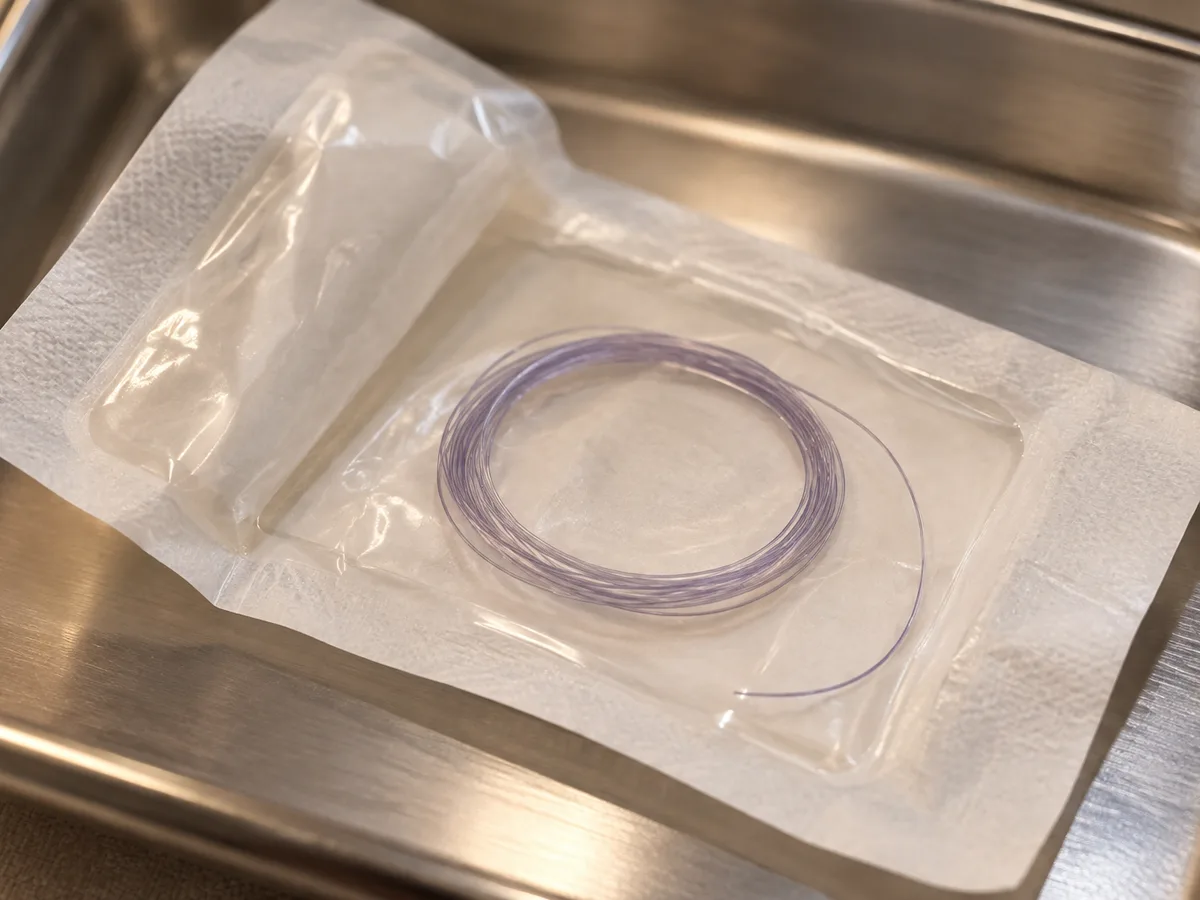
The first effect is mechanical. Barbed or coned sutures, most often polydioxanone (PDO), poly-L-lactic acid (PLLA) or polycaprolactone (PCL), are passed under the skin and used to gather and reposition soft tissue, most commonly along the jawline, the midface and the brow.
That repositioning is visible immediately and is at its best in the first few weeks. It then fades, because the tissue settles, the barbs lose their grip and the suture itself is broken down by the body.
PDO dissolves over roughly six months; PLLA and PCL take longer, closer to twelve to eighteen months. The mechanical lift does not outlast the material, and it usually softens well before the material is gone.
The published series describe the visible lift as clearest at one to three months and largely settled by six to twelve.
The second effect is biological. As the suture degrades it provokes a mild fibrous reaction along its track, and that new collagen leaves the skin a little firmer and thicker than before.
This effect builds over months rather than showing on day one, and it is the part that can persist after the thread has gone. It is subtle.
It reads as better skin quality along the treated line rather than as a lift, and a patient looking for the original repositioning will not see it as the same thing.
Several variables move the numbers.
Age and tissue weight matter most: light early laxity in a face in its forties holds a thread lift longer than heavy descent in a face in its sixties, where the tissue simply weighs more than the barbs can carry for long.
Thread material and count matter, with the slower-dissolving materials and more threads giving a longer mechanical phase. The area matters. The brow and midface tend to hold better than the lower face and neck, where movement and gravity work against the suture all day.
Habits matter, since large weight changes, smoking and heavy sun loosen the result. Technique matters more than any of these, and it is the variable a patient can least assess in advance.
Repeat treatment changes the arithmetic. Most clinicians describe threads as something refreshed at twelve to eighteen months rather than done once, and the second and third rounds may hold a little longer as the collagen effect accumulates.
Whether that schedule is reasonable is a cost and tolerance question as much as a clinical one.
The cost drivers are the number of threads, the material, the areas treated and the clinician's level, and a consultation should set them out plainly without promising a lifespan the literature does not support.
Expert note
The consent forms for thread lifts list dimpling, visible or palpable threads, asymmetry, bruising, swelling, infection, thread extrusion and, rarely, nerve or salivary-gland injury, and they generally state that the lift is temporary. The professional literature is candid that long-term controlled data are thin.
Most published series follow patients for six to twelve months, few beyond two years, and the outcome measures are often clinician or patient ratings rather than measurements. A clinician quoting a two-year lift should be able to say where the number comes from.
Threads are regulated as devices, and the sutures on the American market are cleared for soft-tissue approximation, with some barbed products cleared specifically for midface suspension. The cleared indication and the dissolution time are on the labeling.
A patient who wants a durable record of what was placed can ask for the thread lot and product name to be written into the treatment notes, the way a museum keeps provenance on every object.
The Grammy Museum documents each artifact for the same reason, so that a claim about it can be checked years later.
Next steps
For a reader comparing consultations, the useful test is to ask each clinician for two numbers rather than one: how long the lift is visible, and how long the threads take to dissolve.
A clinic that gives the second number as if it were the first is quoting the material, not the result.
Asking to see photographs of the same patient at one month and at twelve months, rather than at one week, shows what the fade looks like.
Standards bodies publish their specifications so that any engineer can check a claim against the document, the way the ITU does for telecommunications; a thread's material and dissolution profile are on its labeling and can be checked the same way.
The other next step is to ask whether a thread lift is the right tool. For laxity that is early and light, threads compete with radiofrequency and ultrasound tightening. For heavy sagging they compete with surgery, and usually lose.
The separate page on Is Non-Surgical Lifting Worth It for Heavy Sagging? covers that threshold, and Do Threads Leave Visible Marks? covers the other question most people bring to the same consultation.
Where this answer stops
The ranges here come from series that follow patients for a year or two at most, and none has followed the reader's face. A clinician quoting one patient a lifespan should say where the figure comes from.
Before booking
Ask for two numbers, not one
How long the lift is visible and how long the threads take to dissolve are different figures. Whether threads are the right tool at all is the next question: is non-surgical lifting worth it for heavy sagging.